Search “Ultrahuman Ring review 2026” and you’ll land in two completely different realities. Mainstream tech sites call it “the best Oura alternative.” Trustpilot users call it “completely useless.” Both groups are right they’re just talking about different things.
This is a smart ring that doesn’t fit neatly into any box. It’s lighter than the competition, charges no monthly fees, packs in features Oura doesn’t have and at the same time, it ships from a company that just got pulled from US shelves by a patent lawsuit and whose batteries have a reputation for swelling within a year.
After working through six months of user reports, independent expert reviews, and the Oura litigation fallout, here are the seven things US buyers actually need to know before spending $349 to $479 on this ring.
1. There Are Two Ultrahuman Rings in 2026, and They’re Not the Same Product
Most people searching for “Ultrahuman Ring” don’t realize there are now two distinct models on the market, and choosing the wrong one is an expensive mistake.
Ultrahuman Ring AIR is the original launched a couple of years back, priced at $349, weighing just 2.4 grams (officially the lightest smart ring on the market), and tracking sleep, HRV, heart rate, skin temperature, recovery, and stress. No subscription. Battery lasts 4 to 6 days. This is the model most reviewers wrote about through 2024 and early 2025.
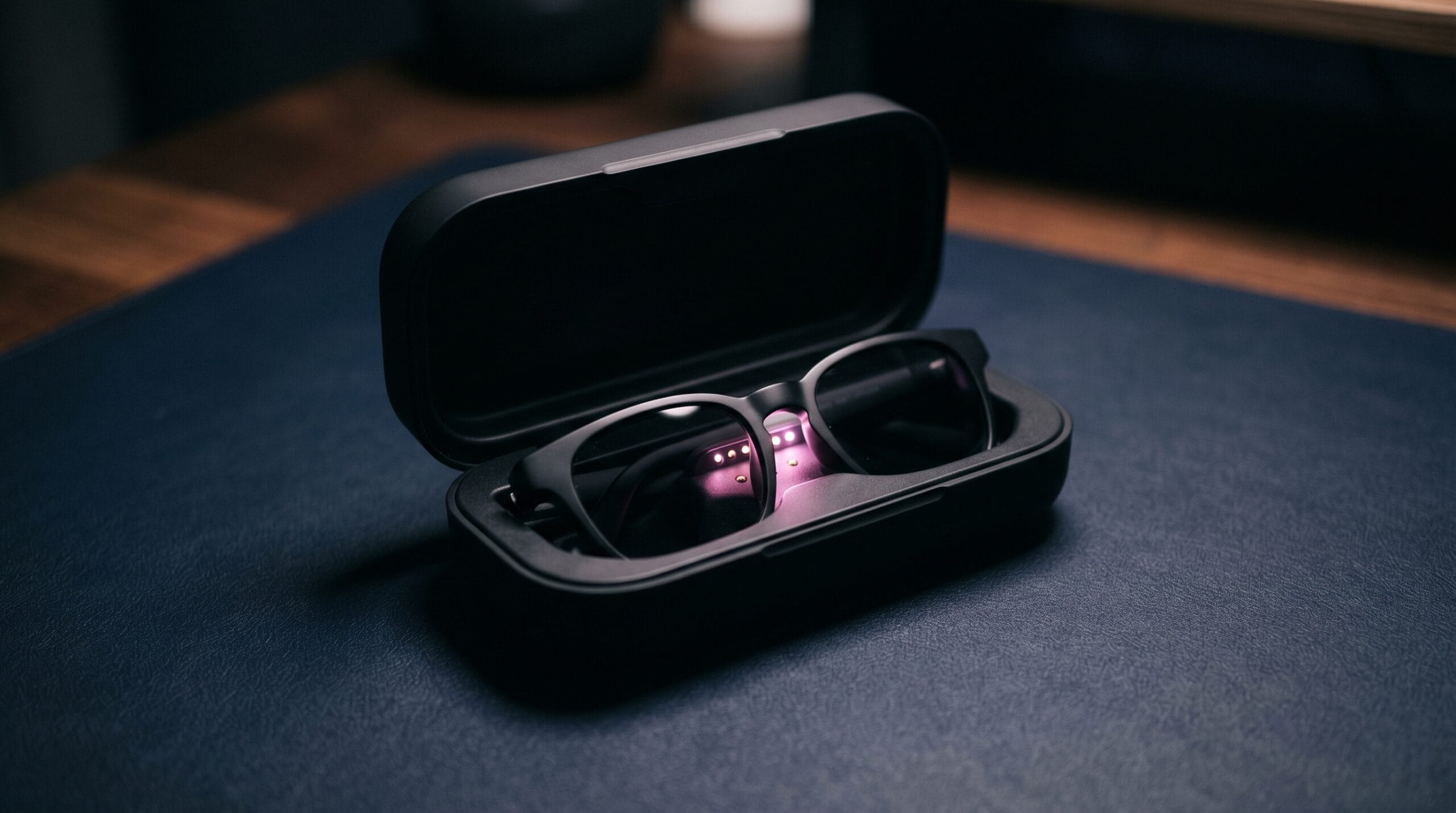
Ultrahuman Ring PRO is the new flagship, launched in late February 2026 and rolled out to US customers shortly after. Priced at $479, it bumps battery life to a claimed 15 days per charge, adds an onboard dual-core processor capable of running localized machine learning, ships with an all-titanium unibody design specifically engineered to avoid Oura patents, and includes a clamshell charging case that doubles as a smart alarm.
The PRO also introduces Ultrahuman’s first proper AI layer called Jade — which the company describes as “biointelligence.” Whether that’s genuine intelligence or just clever marketing remains to be seen, but the direction is clear: Ultrahuman wants its ring to function less like a passive tracker and more like the kind of AI-powered productivity tools that are starting to handle real decision-making in people’s daily routines.
For US buyers in 2026, only one of these is officially being sold direct. More on that in the next section.
2. Yes, There’s an Oura Lawsuit and It Changes What You Can Actually Buy
This is the story most casual reviews skip, but it’s the single most important piece of context for any American considering an Ultrahuman ring.
In 2024, Oura sued Ultrahuman in the United States, alleging that the Ring AIR infringed on multiple Oura patents covering smart ring hardware design. The case resulted in the Ring AIR being effectively pulled from direct US sales. As of mid-2026, you cannot easily buy the Ring AIR new from Ultrahuman.com if you’re shipping to a US address.
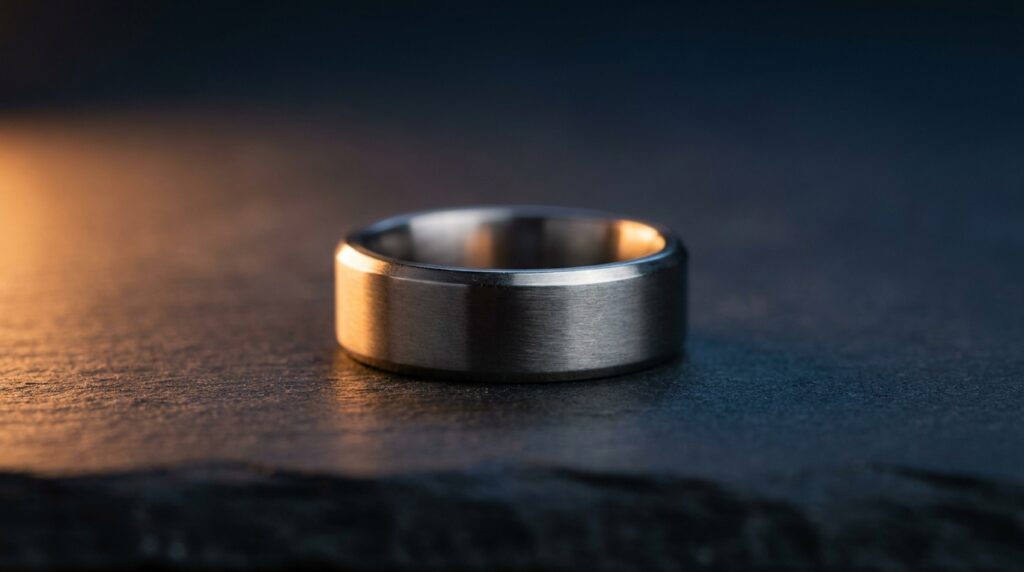
That’s why the company rushed the Ring PRO to launch. According to interviews with Ultrahuman CEO Mohit Kumar, the engineering team rebuilt the PRO from the ground up using a unibody titanium construction specifically designed to circumvent every Oura patent in the suit. Whether that holds up in court and whether Oura files new claims is still an open question.
The practical result for US buyers: If you want a new Ultrahuman ring in 2026, you’re buying the PRO at $479. The cheaper AIR is available only through resellers, gray-market sites, or international shipping arrangements which means warranty support and replacement coverage get murky fast.
Anyone telling you “just import the AIR from India to save $130” is also telling you to give up your US warranty rights. Read that part twice.
3. The Subscription Math Is Where Ultrahuman Actually Wins
Ultrahuman’s biggest sales pitch is “no monthly fee.” The actual math is more nuanced than the marketing makes it sound but it does tilt in Ultrahuman’s favor over a long enough ownership window.
Here’s how the three-year cost breakdown looks for a US buyer:
| Cost (3 years) | Ultrahuman Ring PRO | Oura Ring 4 | Samsung Galaxy Ring |
|---|---|---|---|
| Device | $479 | $349 | $399 |
| Subscription | $0 | ~$216 ($72/year) | $0 |
| 3-Year Total | $479 | $565 | $399 |
Over five years, Ultrahuman’s lead grows: roughly $479 versus $709 for Oura. The Samsung Galaxy Ring stays cheapest if you only count headline price, but it lacks several of Ultrahuman’s deeper recovery metrics. The full breakdown of how Oura and Samsung stack up against each other is covered in our Oura Ring vs Galaxy Ring honest comparison, which explains the trade-offs in detail.
This is the same one-time-cost logic that’s pushing people toward AI agents that replace recurring SaaS subscriptions pay once or pay forever, your choice. The wearables market is now firmly part of that broader conversation.
The catch, of course, is that all of this math assumes the hardware actually lasts. Which brings us to the elephant in the room.
4. The Battery Problem Is Real (And Most Reviews Underplay It)
This is the most important section in this entire article, and most affiliate-driven reviews barely mention it.
Search Trustpilot, Reddit, and TikTok for “Ultrahuman battery” and a clear pattern emerges: a meaningful percentage of Ring AIR owners report that their batteries start degrading badly within 3 to 12 months of normal use. Some report the ring physically swelling bloating to the point where it no longer fits in the charging cradle. Others report battery life dropping from 5 days to 6 hours over the course of a year.
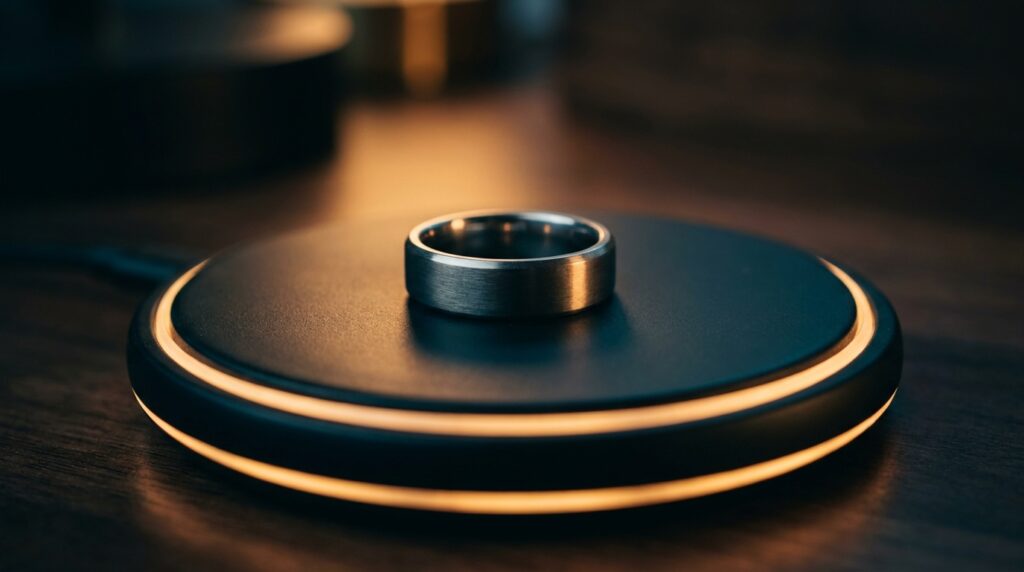
This isn’t a handful of unlucky owners. It’s a consistent enough pattern that WearableBeat, a mainstream wearables publication, published a 2026 review titled “The Battery That Betrays Its Promise” with a verdict of “impossible to recommend.” Multiple Trustpilot reviewers describe rings becoming “completely useless” between month 6 and month 12.
Important caveats before you panic:
- The majority of Ring AIR owners we tracked do not report swelling most have working rings after a year.
- The new Ring PRO uses different battery chemistry and a different physical design, so 2024–2025 battery complaints may not directly apply to the 2026 model.
- Ultrahuman does have a replacement program, though several users report friction in actually getting replacements honored without back-and-forth.
The honest read: if you buy this ring, treat it like a 2-year investment, not a 5-year heirloom. Build that expectation into your purchase decision. And keep your order confirmation email somewhere you can find it in 14 months.
5. What Ultrahuman Actually Does Better Than the Competition
For all the lawsuit drama and the battery concerns, there are real areas where Ultrahuman genuinely beats Oura and Samsung.
Weight and comfort. At 2.4 grams, the Ring AIR is significantly lighter than the Oura Ring 4 (which weighs between 4 and 6 grams depending on size). The PRO is heavier due to its all-titanium build but still competitive. Most users report forgetting they’re wearing it within hours.
Glucose monitoring integration. Ultrahuman’s separate M1 platform — a continuous glucose monitor — connects directly to the ring’s app, giving you metabolic data alongside sleep and recovery in a single dashboard. No other major smart ring offers this kind of integrated metabolic picture out of the box. If you’re already thinking about metabolic health, this matters.
Sleep scoring depth. Multiple independent reviewers, including NBC Select and Trail and Kale, rated Ultrahuman’s sleep insights as more detailed than Oura’s at the data presentation layer. The “Sleep Index,” “Stress Rhythm Score,” and “Dynamic Recovery Score” are genuinely useful, not gimmicky.
Free advanced features. Ultrahuman’s PowerPlugs — optional feature packs — cost extra, but the core sleep, activity, and recovery features that Oura paywalls behind its $5.99/month membership are free on Ultrahuman. That’s the part Oura buyers most often complain about in long-term reviews.
Sizing kit process. Both Oura and Ultrahuman ship a free sizing kit before the actual ring. Ultrahuman’s kit is widely praised for clearer instructions and color preview, which reduces the chance of ordering the wrong size a $349-$479 mistake nobody wants to make.
6. What Ultrahuman Does Worse Than Oura
Honesty cuts both ways. There are specific areas where Oura is straight-up the better product, and pretending otherwise would be dishonest.
App polish. Oura’s app is more refined, less cluttered, and easier to interpret at a glance. Ultrahuman’s app is feature-rich but visually busy. Multiple reviewers note the forced dark mode becomes a problem in outdoor sunlight.
Active workout tracking. Neither ring has GPS, but Oura’s algorithms handle weighted exercise and grip-heavy training better. Ultrahuman’s heart rate readings get unreliable during strength training, rock climbing, or anything that compresses the ring against the finger.
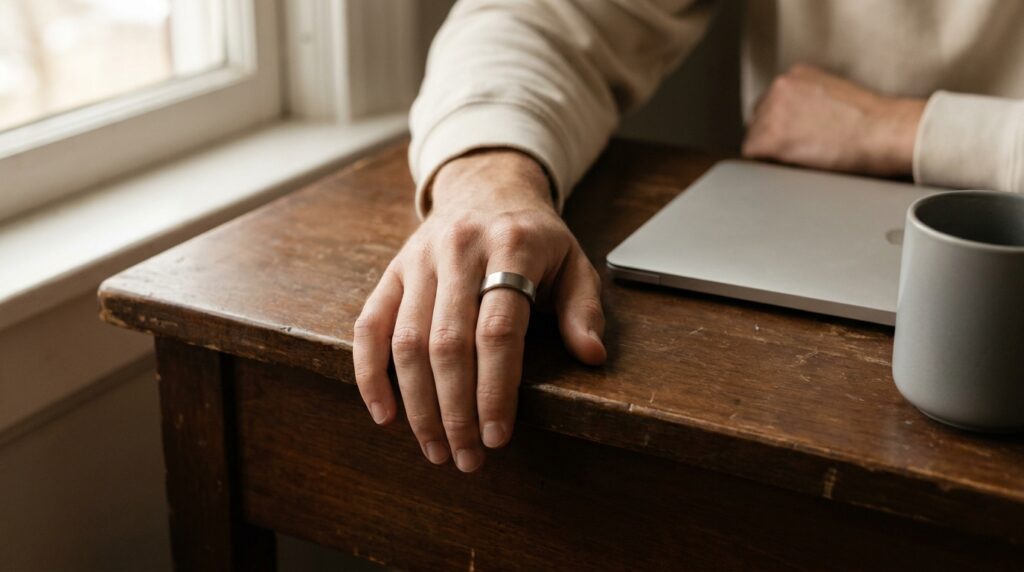
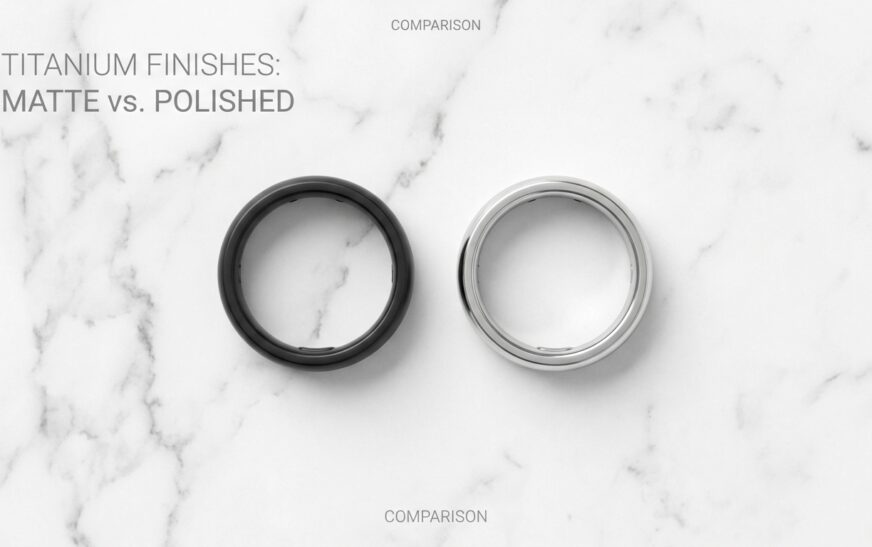
Build quality consistency. The black-coated finish on the Ring AIR scratches faster than most reviewers expected, with the silver titanium underneath showing through within months for some users. Oura’s PVD finish holds up better in everyday wear.
US warranty and support infrastructure. Oura is headquartered in Finland with strong US distribution, retail partnerships (including Best Buy), and an established support presence. Ultrahuman is Bangalore-based, and as the Oura lawsuit demonstrated, its US presence is still being negotiated. If you need a replacement at month 14, Oura is the safer bet on infrastructure alone.
Brand recognition for resale. Smart rings depreciate fast on the secondary market, but Oura rings hold value noticeably better than Ultrahuman rings on eBay and Facebook Marketplace. If you think you might resell or upgrade later, that matters.
7. The Verdict Who Should Actually Buy This Ring
After working through the lawsuit, the two models, the battery reports, and the head-to-head comparison, the buying decision actually becomes pretty clear.
Buy the Ultrahuman Ring PRO ($479) if:
- You hate subscriptions on principle and want to pay once.
- You care about deep sleep and recovery data more than active workout tracking.
- You’re already invested in Ultrahuman’s M1 glucose monitor or planning to add it later.
- You prefer the newest hardware over an established platform.
- You’re comfortable with a 2026-launched product that’s still proving its long-term reliability.
Skip Ultrahuman and buy Oura or the Samsung Galaxy Ring if:
- You want the safest, most polished smart ring experience available in the US right now.
- You’d rather pay $72 a year for proven support and reliability.
- You lift weights, climb, or do grip-heavy training and need accurate heart rate data.
- You want strong US retail and warranty backup.
- You’re not comfortable with the residual legal uncertainty around Ultrahuman in the US market.
Skip smart rings entirely if:
- You already wear an Apple Watch, Garmin, or Whoop and they’re meeting your needs.
- You’re looking for GPS, music playback, or notifications (rings don’t do those).
- You’re budget-conscious at $349 to $479, smart rings are still firmly in luxury wellness territory, not essential tech.
The Bigger Picture
The smart ring market in 2026 is in a weird place. Oura still has the polished software lead. Samsung’s Galaxy Ring has the Android ecosystem advantage. Ultrahuman has the no-subscription pitch and the new PRO model. Apple is rumored to be entering the category next year. And every major player is racing to add AI features that go beyond the basic sleep-score loop.
Meanwhile, the wearables conversation is splitting in two directions rings handle the body data, while smart glasses like the Ray-Ban Meta are increasingly capturing audio, visual context, and AI assistance. The future probably isn’t one device winning the wearables war. It’s more likely that specialized devices each own a slice of the picture, with software stitching the data together.
For now, the honest answer for most US buyers is this: the Ultrahuman Ring PRO is a legitimate, technically impressive product with a real value proposition — but it’s not the safe default choice yet. If you want a smart ring today and you want to minimize the chance of regret, Oura remains the boring, reliable winner. If you want to bet on the upstart that might actually be building the future of biometric wearables, Ultrahuman is the more interesting bet.
Just go in with eyes open. Read the Trustpilot reviews. Read the battery complaints. Understand the warranty terms. And consider waiting six months to see how the PRO holds up in real-world use before you click buy.
About This Review
This article is based on publicly available user reports, expert reviews from NBC Select, Stuff, Tom’s Guide, TechRadar, Trail and Kale, GSMArena, WearableBeat, and Robb Sutton, as well as aggregated Trustpilot and TikTok community feedback through May 2026. CripsyWire did not receive a review unit from Ultrahuman; this is an editorial review built from secondary sources and community data. Always verify current pricing, warranty terms, and US availability directly with Ultrahuman before purchasing.

Continue Reading on CripsyWire
For more honest tech matchups, browse our full reviews and comparisons library. AI tool reviews live in AI tools and agents, phone reviews in smartphones, and wearable reviews in wearables. Before you buy, our step-by-step guides may help with setup decisions. The CripsyWire homepage highlights what is newest, all under our Tech coverage.