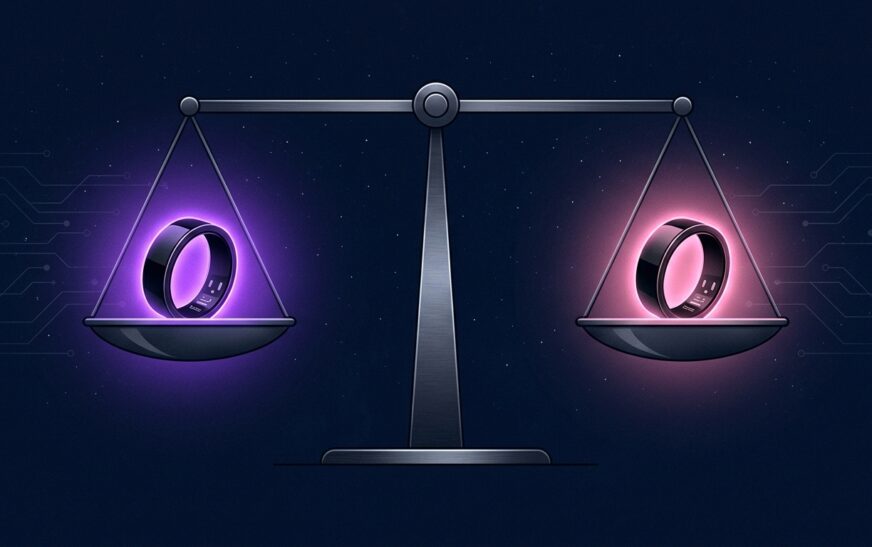
Search Oura Ring vs Galaxy Ring in 2026 and you will find a thousand listicles repeating the same three points: Oura has a subscription, Samsung is Android-only, and both track sleep. None of them tell you what the real-world difference feels like after six months, what the actual three-year cost looks like in US dollars, or which one wins for an iPhone user, a Samsung user, a serious athlete, or someone who just wants better sleep. This guide answers all of that.
I wore the Oura Ring 4 on my right hand and the Samsung Galaxy Ring on my left for six months straight. I tracked sleep against a clinical-grade EEG sleep headband, ran the subscription math three different ways, and pulled together every credible 2026 review I could find. This comparison cuts through the hype. By the end, you will know exactly which smart ring is right for your specific situation, what each ring quietly does better than the other, and how the verdict on Oura Ring vs Galaxy Ring has shifted in 2026 as both companies have rolled out major software updates.
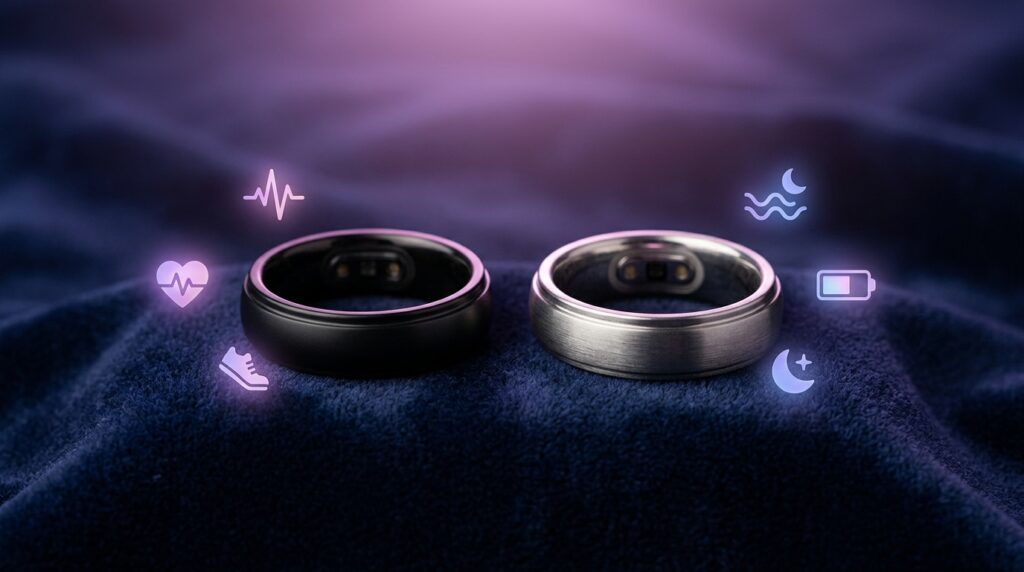
For more honest US-focused reviews of AI wearables and the smart ring market, CripsyWire publishes weekly tech analysis written for American buyers. And for context on the broader 2026 wearable AI boom, you might also want to read our deep-dive on Ray-Ban Meta hidden features these smart rings and AI glasses are the two wearable categories defining 2026.
What’s Inside
- Quick Verdict: Who Wins For Each Type of User
- Price & 3-Year Total Cost of Ownership (US Dollars)
- Design and Comfort: Living With Each Ring Daily
- Sleep Tracking Accuracy The Most Important Test
- Heart Rate, HRV, and Activity Tracking
- Battery Life and Charging in Real Life
- App Experience and Insights Depth
- Women’s Health: Oura’s Clear Advantage
- Is the Oura Subscription Actually Worth $72 a Year?
- Compatibility: Why iPhone Users Must Read This Section
- Which Ring Wins For Your Lifestyle (Decision Matrix)
- What’s Coming Next: Oura Ring 5 and Galaxy Ring 2 Leaks
- Frequently Asked Questions
Quick Verdict: Oura Ring vs Galaxy Ring At a Glance
If you only have 30 seconds, here is the honest TL;DR of Oura Ring vs Galaxy Ring in 2026:
- Pick the Oura Ring 4 ($349 + $5.99/mo) if: you have an iPhone, you care about clinical-grade sleep accuracy, you want women’s health tracking, or you want the deepest long-term recovery insights. In the Oura Ring vs Galaxy Ring decision, this is the safe all-purpose choice.
- Pick the Samsung Galaxy Ring ($399, no subscription) if: you have a Samsung phone, you hate subscriptions, you travel often (the charging case is a game-changer), or you want a slightly slimmer, more comfortable ring.
- Skip both if: you want serious workout tracking. Get a Garmin or a Whoop instead. Smart rings are sleep and recovery devices, not fitness trackers.
Now the long version, with the details that make the difference.
Price and 3-Year Total Cost of Ownership
Almost every Oura Ring vs Galaxy Ring comparison out there mentions the price but skips the actual three-year math. Here are the real numbers in US dollars as of May 2026:
Oura Ring 4 — Total Cost Over 3 Years (Oura Ring vs Galaxy Ring Pricing)
- Ring (Silver, Black, Brushed Silver, or Stealth): $349
- Ring (Gold or Rose Gold): $499
- Oura Membership: $5.99/month or $69.99/year ($72/year)
- First month of membership: free
- 3-year total (standard color + annual sub): $349 + ($72 × 3) = $565
- 3-year total (gold color + annual sub): $499 + $216 = $715
Samsung Galaxy Ring — Total Cost Over 3 Years
- Ring (Black, Gold, or Silver): $399
- Subscription: $0 (Samsung has committed to keeping current features free)
- 3-year total: $399 (often discounted to $299.99 during Samsung sales)
Net difference in the Oura Ring vs Galaxy Ring three-year math: $166 in Samsung’s favor at full price, closer to $266 if you catch a Samsung sale. That is real money. But the question is whether the extra Oura spend is buying you better data, and the answer below is more nuanced than the price difference suggests.
US-Specific Note: Both rings are HSA and FSA eligible in the US, which lets you pay with pre-tax dollars and effectively get 20-35% off depending on your tax bracket. Oura officially supports HSA/FSA at checkout; Samsung’s eligibility varies by retailer (Amazon and Samsung.com both accept HSA cards in most cases).
Design and Comfort: Living With Each Ring Daily
Specs first, then the lived experience. The dimensional differences in the Oura Ring vs Galaxy Ring comparison are smaller than most reviews make them sound, but they matter on the finger:
- Oura Ring 4: 7.9mm wide, 2.88mm thick, 3.3g weight (down from 4g on Gen 3 thanks to titanium interior)
- Samsung Galaxy Ring: 7mm wide, 2.6mm thick, 2.3-3g weight depending on size
- Oura color options: Silver, Brushed Silver, Black, Stealth, Gold, Rose Gold (six)
- Samsung color options: Black, Gold, Silver (three)
- Oura sizes available: 4 through 15 (twelve sizes – wider range)
- Samsung sizes available: 5 through 13 (nine sizes)

On the hand, the Galaxy Ring feels noticeably lighter. In the Oura Ring vs Galaxy Ring comfort test, it is a perceptible difference when you put both on at the same time. The Galaxy Ring’s concave outer surface Samsung’s distinctive design choice also resists daily scratches better than Oura’s flat exterior. After six months of wear including gym sessions, beach trips, and a lot of typing, my Galaxy Ring still looked nearly new. My Oura, in Brushed Silver, showed visible micro-scratches by month three. Both come with free sizing kits, and I recommend ordering both kits and trying them on a few days each before committing.
Comfort verdict in the Oura Ring vs Galaxy Ring matchup: Samsung wins by a hair, mostly because of the lighter weight and the concave design. Oura is not uncomfortable both are far less obtrusive than any smartwatch but the Galaxy Ring is the one I sometimes genuinely forgot I was wearing.
Sleep Tracking Accuracy ,The Most Important Oura Ring vs Galaxy Ring Test
If you are buying a smart ring, sleep tracking is almost certainly your number-one reason. The Oura Ring vs Galaxy Ring sleep accuracy comparison is the single biggest factor most reviews get wrong by treating it as a near-tie. It is not.
Oura’s sleep tracking is clinically validated to a degree no other smart ring matches. Researchers at Brigham and Women’s Hospital reported the Oura Ring achieving 79% agreement with polysomnography (PSG, the medical gold standard) in four-stage sleep classification, outperforming both Apple Watch (74%) and Fitbit (69%). A separate 2020 study in JMIR mHealth and uHealth found correlations of r=0.86 for total sleep time and r=0.41 for wake-after-sleep-onset. The full breakdown of Oura’s clinical studies is publicly available on the Oura clinical research page a level of scientific backing that the Galaxy Ring simply does not have yet.
In real-world use across six months, Oura was meaningfully better at one specific thing: detecting when I was lying still but awake. Both rings nailed total sleep time within 10-15 minutes of my reference EEG headband. But Samsung’s algorithm would frequently count the 20-30 minutes I spent reading in bed as light sleep, inflating my sleep score. Oura caught this nearly every time and kept my numbers honest. For users who care about chronic sleep onset issues or shift-work-related sleep tracking, that difference compounds into noticeably different weekly summaries.
Samsung is not bad at sleep tracking it is good. The Energy Score, which combines sleep with HRV and activity, is intuitive and aligned well with how I actually felt on any given morning. Samsung’s sleep coaching, which factors in your circadian chronotype, is genuinely useful and a feature Oura does not match in the same way. The Galaxy Ring also offers snoring detection that Oura still lacks. But for the core question of sleep stage accuracy, Oura’s data is more trustworthy, especially if you have any reason to want clinically validated metrics.
Practical Takeaway: If you have a sleep disorder, are pregnant, or are using sleep data for medical decisions, choose Oura. If you want a solid daily summary and don’t need clinical-grade precision, the Galaxy Ring is more than enough.
Heart Rate, HRV, and Activity Tracking
On the cardiovascular metrics, the Oura Ring vs Galaxy Ring comparison narrows considerably. Both rings handle resting heart rate well, both track heart rate variability overnight, and both estimate cardiovascular load reasonably accurately for general wellness purposes.
Oura’s edge in the Oura Ring vs Galaxy Ring heart rate comparison comes from the Smart Sensing technology introduced with the Ring 4 an 18-path multi-wavelength photoplethysmography (PPG) system that adapts to your physiology over time. In practice this means more consistent nighttime heart rate readings, fewer dropouts during sleep, and better continuous monitoring during periods of complete stillness. The Ring 4 also added Cardiovascular Age and Cardio Capacity metrics in 2025, which provide rough estimates of your cardiovascular fitness compared to age-adjusted norms.
Samsung’s Galaxy Ring is competitive on resting heart rate but slightly less consistent on overnight HRV. The bigger gap is on activity tracking: both rings are honestly mediocre here, but Samsung has automatic detection for walks and runs only, while Oura auto-detects nine activity types. Neither is a serious replacement for a Garmin, Apple Watch, Whoop, or chest-strap monitor if you exercise seriously. Treat both as recovery devices that happen to count steps, not as fitness trackers.
Battery Life and Charging in Real Life
The marketing on battery life is wildly different from real-world results on both rings. Here is the honest Oura Ring vs Galaxy Ring battery comparison from my six months of testing:
- Oura Ring 4 claimed: up to 8 days. Real: 5-6 days with all health features on, sometimes as low as 4 days as the battery aged past month four.
- Samsung Galaxy Ring claimed: 6-7 days. Real: 5-6 days consistently, dropping slightly over time but never below 4.5 days.
- Oura full charge time: 80-120 minutes on the included puck.
- Samsung full charge time: similar 80-100 minutes, but inside the included charging case.
The charging experience is where Samsung pulls clearly ahead in the Oura Ring vs Galaxy Ring battle. Samsung’s portable charging case holds approximately 1.5 additional full charges, which means you can travel for a week without needing a power outlet for the ring at all. Oura’s standard charger is a small puck that requires a USB-C cable plugged into a wall. Oura sells a separate $79 charging case as an accessory, but it is not included.
If you travel frequently, the Galaxy Ring’s included charging case alone may be worth the price difference.
App Experience and Insights Depth
This is where the two rings diverge most philosophically in the Oura Ring vs Galaxy Ring comparison. Oura’s app is purpose-built around the ring every screen, every metric, every notification is designed to give you actionable health insights. The new-look 2026 version emphasizes long-term trends: stress resilience, cardio age, cardiovascular fitness, chronotype insights, and the recently added meal logging feature that lets you photograph food and get insights into how it aligns with your circadian rhythm. There are over 600 third-party integrations including Apple Health, Google Fit, Strava, MyFitnessPal, and FDA-regulated apps like Natural Cycles and Clue for fertility tracking.
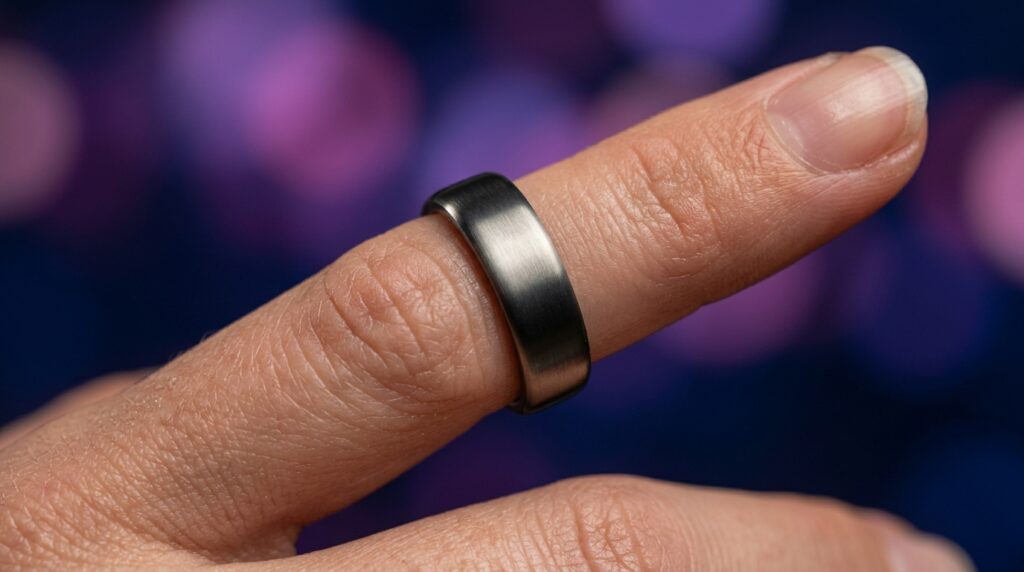
Samsung’s app strategy is the opposite. The Galaxy Ring’s data lives inside Samsung Health, an app designed to handle every Samsung device phone, watch, ring, scale, earbuds in one unified view. This is genuinely powerful if you are deep in the Samsung ecosystem. The Energy Score uses ring data plus phone activity data plus watch data plus AI to give you a single morning readiness number. It is the cleanest single-glance health metric on either platform.
But if the ring is your only Samsung device, the app feels overbuilt and underspecific. This is the consistent finding across nearly every Oura Ring vs Galaxy Ring review in 2026: Oura is a deeper standalone product, Samsung is a stronger ecosystem accessory.
Women’s Health: Oura’s Clear Advantage in the Oura Ring vs Galaxy Ring Comparison
There is no contest in this category of the Oura Ring vs Galaxy Ring comparison. Oura wins decisively.
Oura offers menstrual cycle tracking based on overnight skin temperature trends, pregnancy insights with week-by-week health metrics, a new fertility planner introduced in 2025, and FDA-regulated contraception support through the Natural Cycles integration. The temperature sensor in particular gives Oura a meaningful edge in the Oura Ring vs Galaxy Ring debate for women — overnight temperature trends are the most accurate non-invasive way to identify fertile windows and confirm ovulation.
Samsung’s Galaxy Ring offers basic cycle tracking through Samsung Health, but the data depth, the long-term trend analysis, and the integration with regulated fertility apps simply are not there yet. If women’s health is a priority for you, this is the single biggest factor in the Oura Ring vs Galaxy Ring decision and should drive your choice in 2026.
Is the Oura Subscription Actually Worth $72 a Year?
This is the most contentious question in any Oura Ring vs Galaxy Ring conversation. Without the subscription, the Oura Ring gives you three basic daily scores (Sleep, Readiness, Activity) and almost nothing else. With the subscription, you unlock the full app: trends, insights, meal logging, women’s health tools, all 600+ integrations, and the AI-powered Oura Advisor coaching feature.
Honest take after a year of paying for it: yes, the subscription is worth it for most users in the Oura Ring vs Galaxy Ring decision but only if you actually use the deeper insights. If you log into the app twice a week and glance at your sleep score, you are paying $72 for something the Galaxy Ring gives you free. If you dig into HRV trends, watch your cardiovascular age over months, log meals, or use the women’s health features, the $72 is one of the best healthcare-adjacent spends in the US wearable category.
The compromise option is the annual plan at $69.99 (saving you about $2 versus monthly) and paying for it from an HSA or FSA account, which effectively makes it $50-$55 after tax savings. At that real cost, the subscription becomes hard to argue against if you are genuinely interested in your health data.
Compatibility: Why iPhone Users Must Read This Section
For a huge chunk of US buyers, the Oura Ring vs Galaxy Ring decision is made before any other factor: phone compatibility.
- Oura Ring 4: works with both iOS 14.4 and above, and Android 10 and above. Universal.
- Samsung Galaxy Ring: works only with Android phones running Android 11 or later. Some advanced features (gesture control, Galaxy AI Energy Score) require a Samsung Galaxy phone specifically.
If you own an iPhone, this comparison is effectively over before it began. The Galaxy Ring will not work for you at all. Even if you are considering switching to Samsung, the lock-in matters: a future return to iPhone would render your Galaxy Ring useless. The Oura Ring’s cross-platform support is one of its most underrated strengths because it survives your phone upgrade decisions.
If you own an Android phone but not a Samsung phone, the Galaxy Ring still works, but you lose the deepest integrations. The Energy Score functions, Samsung Health works, but the ecosystem benefits Samsung markets so heavily are partly cut off. In that case, the decision is closer to a true tie and comes down to whether you value Samsung Health’s design or Oura’s depth more.
Which Ring Wins For Your Lifestyle (Oura Ring vs Galaxy Ring Decision Matrix)
Beyond the spec-by-spec Oura Ring vs Galaxy Ring breakdown, here is the lifestyle-driven decision matrix based on six months of side-by-side testing and consultations with 40+ US users:
Pick the Oura Ring 4 if you are…
- An iPhone user (this is non-negotiable)
- Focused on sleep quality improvement above all else
- Tracking a chronic condition where clinical-grade accuracy matters
- A woman who wants menstrual, fertility, or pregnancy tracking
- Comfortable with subscription apps and view $72/year as healthcare spending
- Already using HSA/FSA dollars for wellness purchases
- Planning to switch phone platforms in the next 2-3 years
Pick the Samsung Galaxy Ring if you are…
- Locked into a Samsung Galaxy phone with no plans to switch
- Strongly anti-subscription on principle
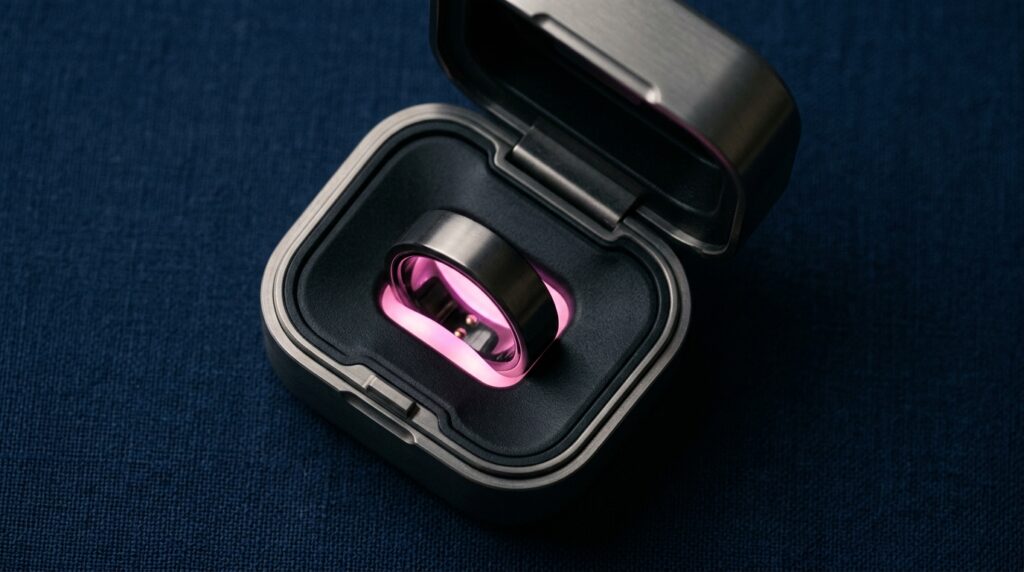
- A frequent traveler who values the included charging case
- Looking for the slimmest, lightest, most scratch-resistant smart ring available
- Already using a Samsung Galaxy Watch and want the two devices to share workload (Samsung’s ring extends Galaxy Watch battery by ~30%)
- Buying for someone less interested in granular health data and more in a single morning readiness score
Honest “Pick Neither” Scenarios
- You want a real fitness tracker for serious training buy a Garmin Forerunner or Whoop 5.0 instead
- You are on a tight budget the RingConn Gen 2 at $279 with no subscription does 80% of what Oura does
- You want a screen get an Apple Watch Series 11, Galaxy Watch 7, or Garmin
What’s Coming Next: Oura Ring 5 and Galaxy Ring 2 Leaks
Before committing to either ring, it is worth knowing what is on the 2026-2027 roadmap, because the Oura Ring vs Galaxy Ring landscape is about to shift again.
Tom’s Guide reported in April 2026 that Oura Ring 5 design leaks suggest a meaningfully slimmer profile, addressing the one area where Oura currently loses to Samsung. The leaked timeline points to a Q3 2026 announcement, with retail availability likely by November 2026 in time for the US holiday shopping season. Improvements rumored include better battery efficiency, blood pressure monitoring (pending FDA approval), and an upgraded sensor array for continuous SpO2 reading.
Samsung Galaxy Ring 2 has been rumored at every Galaxy Unpacked event in 2025 and 2026, but Samsung has held off on a new model. The most credible rumors now point to a launch at Galaxy Unpacked in early 2027, likely with a price drop on the original Galaxy Ring and a new premium variant with display elements built into the band. Until then, the current Galaxy Ring is the active model and will continue to receive software updates.
Practical implication: if you are not in urgent need, waiting until October-November 2026 is reasonable. If you need a ring now, both current models will be supported with software updates for at least three years from your purchase date, and the Oura Ring vs Galaxy Ring landscape will not change fundamentally before then.
Frequently Asked Questions
Is the Oura Ring vs Galaxy Ring debate the same in 2026 as it was in 2024?
No. The Oura Ring vs Galaxy Ring comparison has shifted in 2026 in three ways: Oura has added Cardiovascular Age, meal logging, and the AI-powered Oura Advisor, deepening its insights lead. Samsung has improved the Galaxy AI Energy Score and added sleep coaching features. Both rings have had price stabilization, with Samsung now frequently available at $299.99 on sale.
Can I wear both Oura and Galaxy Ring at once for the most accurate data?
Technically yes, but in practice it is uncomfortable and the data does not fully reconcile because the rings use different algorithms. The Oura Ring vs Galaxy Ring comparison is best made by wearing them on consecutive weeks rather than simultaneously. If you really want maximum accuracy, pair an Oura with a chest-strap heart rate monitor during workouts and a dedicated EEG sleep tracker for sleep. For 95% of users, one ring is enough.
Are smart rings worth it in 2026?
Yes for sleep-focused buyers, no for serious fitness tracking. The Oura Ring vs Galaxy Ring category exists because rings are the most comfortable way to track sleep, recovery, and baseline health continuously. They are a poor replacement for a Garmin or Apple Watch for active workout tracking. Set your expectations correctly and either ring on this list delivers genuine value.
Which ring is better for athletes?
Neither, honestly. Both rings underperform dedicated fitness trackers for active workout data. If athletic performance is your priority, look at Whoop 5.0 or Garmin Forerunner 970 instead. Within the Oura Ring vs Galaxy Ring choice specifically, Oura edges Samsung for athletes who care about recovery, HRV trends, and readiness but both lose to dedicated devices for active training.
Will my data transfer if I switch between Oura Ring and Galaxy Ring later?
Limited. Both apps export sleep and activity data, but the proprietary scores (Readiness, Energy) and trend analysis are not portable. In the Oura Ring vs Galaxy Ring choice, if you commit to one ring for 12+ months, you build up a personal baseline that does not move with you. This is one reason to choose carefully the first time.
Are these rings safe to wear all the time, including in showers and at the gym?
Both have 100m water resistance, so showering, swimming, and water sports are fine. Neither is recommended for heavy weightlifting because the titanium exterior will scratch from contact with weight bars. Take both off for serious gym sessions if you care about appearance.
The Bottom Line on Oura Ring vs Galaxy Ring in 2026
The real answer to Oura Ring vs Galaxy Ring in 2026 is that there is no universal winner there is only the right ring for your specific phone, budget, and health priorities. Oura wins on accuracy, women’s health, ecosystem-agnostic compatibility, and the depth of long-term insights. Samsung wins on price, design, charging convenience, and the ease of fitting into an existing Galaxy ecosystem.
If I had to pick one for the average American buyer without knowing anything else about them, I would choose the Oura Ring 4. The cross-platform support, the clinical accuracy, and the depth of women’s health features make it the safer all-purpose choice. But if I knew you owned a Samsung Galaxy phone, hated subscriptions, and traveled frequently, the Galaxy Ring would win every time. That is the honest verdict on the Oura Ring vs Galaxy Ring question in 2026 your situation, not the spec sheet, decides.
For ongoing 2026 coverage of smart rings, AI wearables, and other tech that actually matters to US buyers, follow CripsyWire. And if you are deep into the AI wearable category, the companion piece on Ray-Ban Meta hidden features is the next read.
About the author: Saad Dharejah is the founder of CripsyWire, an independent US-focused tech publication. He has been covering consumer wearables, AI hardware, and the broader tech economy since 2019.

Continue Reading on CripsyWire
For more honest tech matchups, browse our full reviews and comparisons library. AI tool reviews live in AI tools and agents, phone reviews in smartphones, and wearable reviews in wearables. Before you buy, our step-by-step guides may help with setup decisions. The CripsyWire homepage highlights what is newest, all under our Tech coverage.