Type DVD screensaver into Google on a desktop browser in 2026 and the Google logo detaches from the top of the page, starts changing colors, and bounces around the screen at lazy angles, occasionally clipping the edges, never quite hitting a corner. It is a perfectly designed waste of time, and it is one of the most-shared Easter eggs Google has ever launched.
The fact that a screensaver from a dead piece of hardware can still trigger this much joy a quarter-century after its peak is worth thinking about. The bouncing DVD logo is no longer just nostalgia. In 2026, it is a cultural object the internet keeps remaking, parodying, and watching for hours at a time. Here is why.
What the DVD Screensaver Actually Was
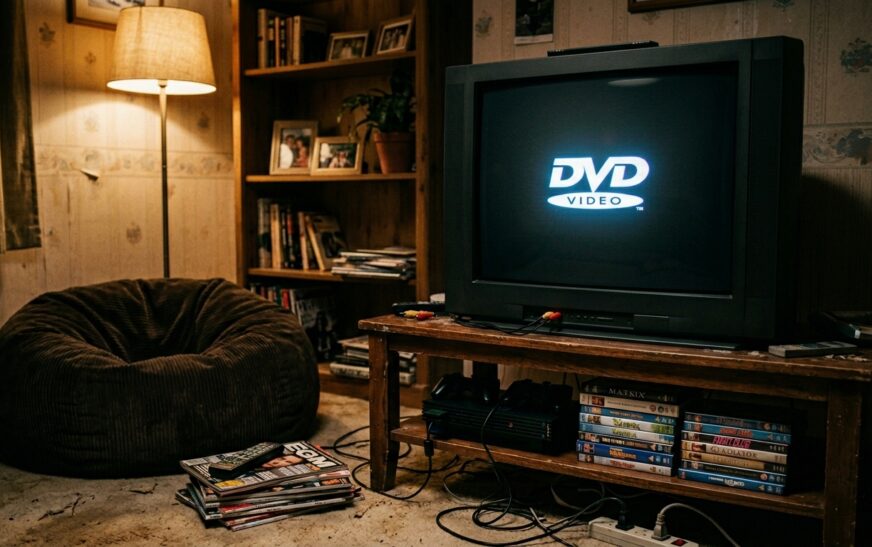
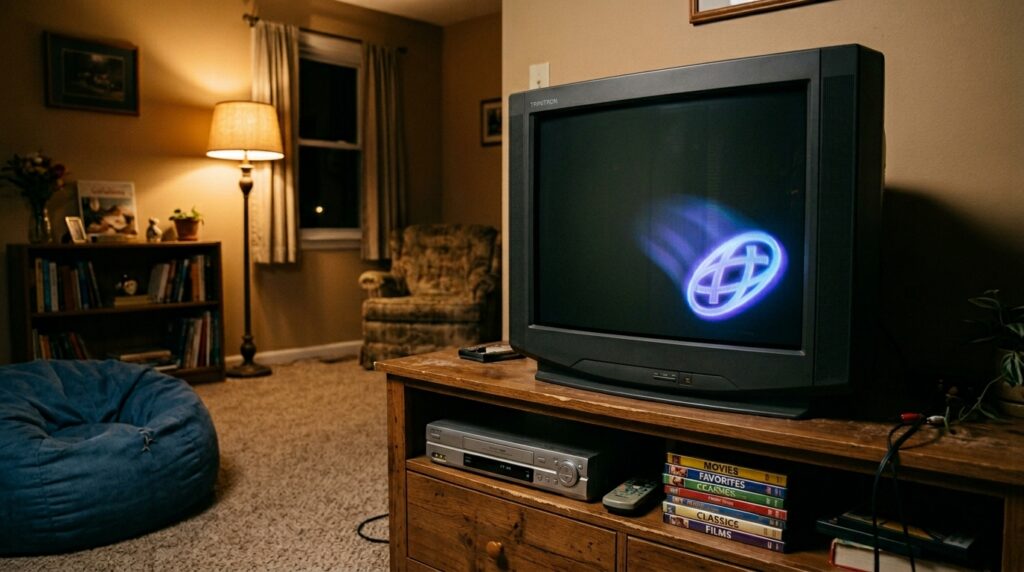
The original DVD screensaver was a piece of firmware shipped on DVD players starting in the late 1990s. When a player sat idle on its menu screen disc inserted, no playback started the device would activate a screensaver mode in which the DVD-Video logo bounced slowly around a black background, ricocheting off the edges at fixed angles.
The screensaver served a real technical purpose. CRT televisions of that era were prone to burn-in: if a static image stayed on screen for too long, the phosphors would degrade unevenly, leaving a permanent ghost of that image even when the TV was off or showing other content. Moving the logo prevented any single area of the screen from holding the same color for too long. As a bonus, on cheaper DVD players, it kept the laser assembly slowly active rather than sitting in one spot and risking damage to the disc’s reflective layer.
In other words, the bouncing logo existed for boring engineering reasons. Nobody at Sony or Pioneer or Toshiba sat down and tried to invent a meditation aid. They were trying to keep televisions from breaking.
The Corner Hit: Why It Became an Obsession
The mathematics of the bouncing logo are simple. The logo moves in a straight line. When it hits a wall, it reflects at the angle of incidence. Hit the left wall, bounce right. Hit the top, bounce down. Run that forever, and you have a deterministic path that visits the same approximate trajectories in a long, slow cycle.
The geometry of this means that the logo will, in theory, eventually hit a corner perfectly both axes reflecting at the exact same frame. In practice, it can take anywhere from two minutes to forty-five minutes, depending on the starting angle, the speed, and the rounding errors in the firmware. Some implementations are designed so that the corner hit is mathematically guaranteed within a certain window. Others, due to floating-point drift, may never hit a corner at all over a sufficiently long observation.
This is the core of the cultural obsession. The corner hit is rare but possible. You cannot predict exactly when it will happen. And when it does, the visual payoff is a perfectly clean overlap of the logo with the corner of the screen, which the human brain reads as a satisfying symmetry. It is the same psychological reward as a clean strike in bowling, a free throw that hits nothing but net, or a tetris line clear.
The most famous depiction of the obsession is the cold open of an episode of The Office, in which the entire conference room stops paying attention to a presentation because everyone is silently rooting for the logo to hit the corner. The eruption of joy when it finally does for those who have not seen it, look it up is one of the most accurate depictions of office-based collective focus ever filmed.
How the DVD Screensaver Became a Meme
The DVD logo had a long, dormant life on the internet before it became the cultural object it is in 2026. The earliest YouTube videos of bouncing-logo loops appeared in the late 2000s. By the mid-2010s, dedicated sites like BouncingDVDLogo had launched, hosting browser-based recreations. A Twitch and YouTube subculture emerged around livestreaming the screensaver and waiting for corner hits one stream reportedly logged 12 corner hits out of 6,849 attempts as of 2018.
Three things turned the meme from a niche internet joke into a mainstream cultural object.
First, the 2021 Google Easter egg. Google added the bouncing-logo animation as a search result for the query “DVD screensaver,” detaching the Google logo from the page and letting it bounce. The feature went viral on X and TikTok within hours. Younger users who had never owned a DVD player were suddenly experiencing the bouncing-logo phenomenon for the first time, often without context.
Second, the lofi hip-hop visual aesthetic. Lofi YouTube streams in the late 2010s and early 2020s leaned heavily on retro and analog visuals, including bouncing logos, CRT scan lines, and slow-pan still frames. The bouncing logo got absorbed into that aesthetic as a calming, low-effort background element.
Third, the COVID-era explosion of “oddly satisfying” content. TikTok and Reddit communities devoted to satisfying loops soap cutting, soup pouring, pressure washing adopted the DVD screensaver as a kind of patron saint of the genre. It is the original oddly satisfying loop, predating the term by two decades.
By 2026, the bouncing-logo aesthetic has been adopted into music videos, advertising backgrounds, livestream waiting screens, and even modern art installations. The original technical artifact has been thoroughly absorbed into mainstream visual culture.
The DVD Screensaver You Can Run Today
If you want to experience the original DVD screensaver in 2026, the easiest options are:
Google’s built-in Easter egg. Type “DVD screensaver” into Google on a desktop browser. The Google logo will start bouncing around your search results page. It works in Chrome, Firefox, Edge, and Safari. It does not work in most mobile browsers as of mid-2026.
Neal.fun. The popular site by Neal Agarwal hosts a clean, full-screen version at nealfun.org/dvd-screensaver. It loads instantly, runs in any browser, and is the closest thing to the original DVD player aesthetic.
Dedicated screensaver apps. macOS and Windows both have third-party screensaver apps that include a bouncing-logo mode. These are useful if you genuinely want a screensaver and not just a webpage tab.
Custom-image versions. A handful of sites including Dvdify and various TikTok-aware tools now let you upload your own logo, brand mark, or photo and convert it into a bouncing-screensaver animation that you can download as an MP4 or WebM file. This has become a small business for trade-show display content and digital signage.
The thing nobody has fully replicated and possibly never will is the exact firmware behavior of an early-2000s DVD player on a CRT television. The slight color bleeding from the analog signal, the chromatic aberration on the screen edges, the way the logo would briefly halo when it bounced. These are details of a specific hardware era that has now passed. The modern recreations are cleaner. The original was warmer.
What the DVD Screensaver Tells Us About 2026 Internet Culture
This is going to sound bigger than it is, but stay with me. The DVD screensaver is the perfect cultural object for the way the internet works in 2026, and understanding why explains a lot about what makes media spread today.
First, it is infinite and free. You can watch the bouncing logo forever, and you never have to pay for it. There are no ads, no subscription, no algorithmic gatekeeping. This is rare in 2026 and increasingly valued.
Second, it has low cognitive overhead. You do not need to know anything to enjoy it. No backstory, no characters, no plot. It works on a five-year-old and a 65-year-old.
Third, it has a built-in random reward schedule. The corner hit might come in three minutes. It might come in forty. The unpredictability is the addiction mechanism, and it is the same psychological pattern that powers slot machines, mobile games, and infinite scroll. The difference is that the DVD screensaver does not actually sell you anything when you finally get the payoff. There is no in-app purchase. You just get to feel satisfied for a second, and then it keeps bouncing.
Fourth, it is deeply social. Almost no one watches the DVD screensaver alone. The point is to share the moment with someone else when the corner hit happens. The Office scene became iconic because it captured this perfectly the collective hush, the collective cheer.
For another category of social engagement that has grown faster than the mainstream tech press has noticed, our coverage of LinkedIn Games and the daily puzzle ecosystem covers the modern version of this same phenomenon: low-stakes group focus on a shared, predictable, slightly random visual reward.
FAQ: DVD Screensaver
What is the DVD screensaver? The DVD screensaver is a firmware-level screensaver that shipped on most DVD players starting in the late 1990s. When the player sat idle on its menu, the DVD-Video logo would slowly bounce around the screen, ricocheting off the edges and changing colors.
Why does the DVD logo never seem to hit the corner? It mathematically can, but the conditions have to align perfectly. The starting angle, the screen aspect ratio, and the speed all interact, which is why some implementations take 2 minutes and others take 45 minutes for a clean corner hit. Some implementations, due to floating-point drift, may never hit a corner exactly.
How do you trigger the DVD screensaver Google Easter egg? Type “DVD screensaver” into Google search on a desktop browser. The Google logo will detach from the search results page and start bouncing around the screen, changing colors. It currently does not work on most mobile browsers.
Why was the DVD screensaver invented? To prevent CRT television burn-in. Static images held on a CRT screen for too long could cause permanent damage to the phosphors. Moving the logo prevented any single area from being held at the same color long enough to cause damage.
Is the DVD screensaver still relevant in 2026? Yes, as a cultural object. Modern displays no longer suffer from burn-in the way CRTs did, so the screensaver no longer serves its original technical purpose. But the bouncing-logo aesthetic has been absorbed into mainstream visual culture and lives on as a meme, an Easter egg, and a category of “oddly satisfying” content.
Can I make a custom DVD screensaver with my own logo? Yes. Sites like Dvdify and various open-source tools now let you upload your own image or logo and generate a bouncing-screensaver animation that you can download as a video file. This has become a small commercial niche for trade-show booths and digital signage.
Final Thoughts
The DVD screensaver is one of those rare cultural objects that has outlived the technology that created it by a margin of decades and is, if anything, more visible now than at its actual peak. The original purpose keeping CRTs from burning in does not apply to any television sold in 2026. The hardware that ran it is in landfills. And yet, the bouncing logo continues to spread, get parodied, and earn corner-hit screams from people who have never touched a DVD player in their lives. There is something genuinely useful about an internet artifact that asks nothing of you, sells nothing to you, and gives you a small rush of satisfaction when geometry briefly cooperates. In 2026, that is rarer than it should be. Type the words into Google, watch the logo bounce, wait for the corner. The internet was supposed to be like this more often.

Continue Reading on CripsyWire
For more practical tutorials and hidden features, see our full how-to guides section. AI workflow guides feed into the broader AI tools and agents coverage, phone tricks live in smartphones, and wearable setup walkthroughs in wearables. When you are deciding what to buy, the reviews and comparisons section helps. All part of CripsyWire Tech, and the homepage shows what is newest.