Quick answer: FlowGPT is a free community platform for finding, testing, and sharing AI prompts and AI characters. It holds more than 100,000 user-made prompts and over 1 million AI characters and chatbots, and you can browse and use the core library without paying. Paid plans — Plus at $14.99 a month and Ultra at $24.99 a month — add Flux credits for advanced models, more free chats, and stronger AI memory. It is best thought of as a library and a playground, not as a chatbot itself.
A good prompt is the difference between an AI answer that is useful and one that is useless. Most people learn that by trial and error, typing the same request three different ways until something works. FlowGPT exists because thousands of people have already done that trial and error and published the prompts that worked — and because other people want to chat with AI characters that strangers have built.
This guide explains what FlowGPT is, what you can actually do on it, what it costs, how to get good results from it, and where its limits are. It is not a review written from a press release; every number is dated to the most recent check, and the prices are the ones listed on the site as of August 2026.
What is FlowGPT?
FlowGPT is an open, community-driven platform for AI prompts and AI characters, run by FlowGPT Inc. in San Francisco. It launched in 2023, when ChatGPT was a year old and everyone was discovering that the quality of the answer depends on the quality of the question. Its homepage calls itself “The best AI ChatGPT Character & Prompt Store”, and the idea is simple: instead of every user inventing prompts from scratch, the community shares them, rates them, and improves them together.
People often call it the “GitHub and Reddit of AI prompts”, and the comparison is fair. Like GitHub, it is a library of things other people built that you can copy, adapt, and build on. Like Reddit, it is a community where the best work rises through votes and comments, and the worst sinks. As checked on 27 August 2026, the platform lists more than 1 million AI characters and bots to chat with, and over 100,000 prompts across more than 20 categories. Those numbers are self-reported by the platform and by the review sites that track it, so treat them as the platform’s claim rather than an audited count — but the library is large by any measure, and it grows every day.
FlowGPT is not a chatbot company. It does not build its own AI model. It is a layer on top of other people’s models — ChatGPT, Claude, Gemini, Llama, and image tools like Midjourney — giving you prompts to use with them and characters to chat with through them. If you are still deciding which chatbot to use in the first place, the honest comparison is between Copilot and ChatGPT, because FlowGPT assumes you already have a model in mind and helps you use it better.
What you can find on FlowGPT
The prompt library covers almost every job people give to AI. The main categories are job hunting, academic work, business, programming, marketing, productivity, image generation, and prompt generation itself — prompts that help you write better prompts. Within those, you will find resume rewriters, code debuggers, lesson planners, sales email writers, and social media caption generators, all written by users and rated by other users.
The character side is bigger and stranger. The categories include anime, game, fantasy, romantic, drama, classroom, scenario, villain, protector, celebrity, and original characters. Some are useful — a tutor, a coding mentor, a language practice partner. Some are pure entertainment — a fantasy villain to argue with, a character from a show to roleplay with. The platform also runs a leaderboard, creator profiles, public chats, and a Discord community, and it runs weekly creator cash bounties with prize pools reported between $1,000 and $10,000 or more, which is how the best creators get paid for their work.
| What it is | What you do with it |
|---|---|
| Prompt library | Find a prompt for a job, copy it, adapt it, use it with ChatGPT or another model |
| In-platform testing | Run a prompt inside FlowGPT and see the output before copying it elsewhere |
| AI characters | Chat with a persona someone built — tutor, mentor, roleplay character, celebrity |
| Creator Center | Build and publish your own prompts, characters, and AI apps |
| Collections | Save and organise your favourite prompts for repeated use |
| Community | Rate prompts, follow creators, join bounties, talk on Discord |
How FlowGPT works
Using FlowGPT follows a simple pattern. First, you search or browse for a prompt that matches your job — say, a prompt that turns a rough draft into a polished email. Second, you test it inside FlowGPT’s playground, which runs the prompt against a real model (GPT-4o, Claude 3.5 Sonnet, Gemini 1.5 Flash, and others) so you can see the output before you commit to it. Third, you copy the prompt, adapt it to your exact need, and use it wherever you work.
The feature that makes this practical is variables. Many prompts use placeholders like {{topic}} or {{audience}}, so instead of editing the prompt text you just fill in the blanks — your topic, your audience, your tone — and the prompt assembles itself. That is the difference between a prompt and a template, and it is why a good FlowGPT prompt can be reused dozens of times for different jobs. If you want to write your own prompts from scratch instead of borrowing them, the skill is the same one covered in the guide to writing ChatGPT image prompts that actually work — be specific, give the AI a role, and show it what good output looks like.
You do not need an account to browse, and the core library is free without a credit card. An account lets you save collections, follow creators, and publish your own prompts. The platform earns its money from the paid plans, which are covered below.
FlowGPT characters and chatbots
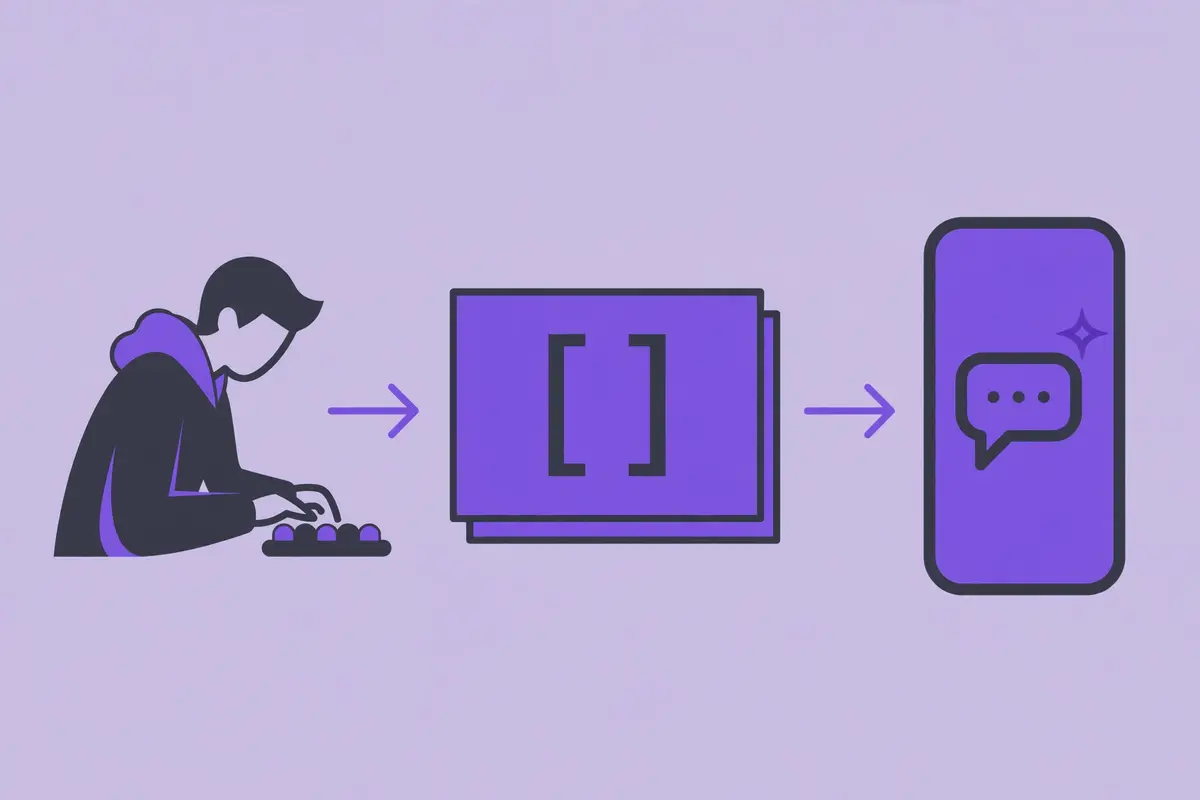
The character side is where FlowGPT stops being a tool and becomes a community. A character is a persona built on top of a language model: a backstory, a personality, a way of speaking, and sometimes a knowledge base. You chat with it the way you would chat with a person, and it stays in character. Some are built for learning — a history tutor, a Spanish conversation partner, a coding mentor. Some are built for fun — a villain to argue with, a fantasy companion, a celebrity impersonation.
The Creator Center is where characters are made. Anyone can build one, give it a personality and a backstory, and publish it for the community. Good characters get followers, ratings, and bounties. The platform also offers AI memory on paid plans, which lets a character remember earlier conversations — a small thing that makes a long conversation feel much more real. Building a character is, in a small way, the same work as creating an AI agent: you define what it knows, how it behaves, and what it should do, and then you let people use it.
The honest limit is that a character is only as good as its creator’s writing and the model underneath it. A well-written character on a strong model can be genuinely useful and entertaining. A poorly written one is a chatbot with a costume on. The ratings and the number of chats a character has had are the best guide — the community’s judgement is usually right.
FlowGPT pricing
FlowGPT is free to explore, and the paid plans add credits and capacity rather than locking the library away. Prices below are as listed on the site and checked on 27 August 2026; they may have changed since.
| Plan | Price | Monthly Flux | Free chats every 4 hours | AI memory |
|---|---|---|---|---|
| Free | $0 | None | Limited, free models only | Basic |
| Plus | $14.99/month or $144.99/year | 1,500 | 25 across featured models | 2× enhanced |
| Ultra | $24.99/month or $244.99/year | 2,500 | 50 across featured models | 6× enhanced |
Flux is FlowGPT’s virtual token. You spend it when you use advanced AI models inside the platform, and paid plans include a monthly allowance of it. Plus also adds a subscriber badge, priority Discord support, customised chat backgrounds, and a 5% recharge bonus; Ultra adds faster responses, early access to new features, and a 10% recharge bonus. The annual prices work out to about $12.08 a month for Plus and about $20.42 a month for Ultra, so the yearly plan saves roughly 19%.
Older review pages cite a $9.99 a month Pro tier. That price appears to be from an earlier pricing structure; the current listed tiers are Plus and Ultra at the prices above. If you are deciding whether to pay, the question is not whether the library is worth it — the library is free — but whether you will use enough advanced-model chats and character memory to justify $15 or $25 a month. Most casual users will not. Heavy users who chat with characters daily or test prompts constantly might.
FlowGPT’s community: bounties, leaderboards, and Discord
FlowGPT is a community first and a tool second, and the community runs on three things: bounties, leaderboards, and Discord. The bounties are weekly contests where creators submit prompts or characters for a theme and the best ones win cash, with prize pools reported between $1,000 and $10,000 or more. The leaderboard ranks creators by how much the community uses and rates their work, so a good prompt can make its creator visible to hundreds of thousands of people. And the Discord server is where the community actually talks — asking for prompts, sharing results, and getting help when a prompt does not work.
That matters because a prompt library without a community goes stale. Models change, new models appear, and a prompt written for GPT-4 in 2024 may not be the best prompt for GPT-5 in 2026. The community keeps the library current in a way a static list never could, and the bounties give creators a reason to keep improving their work. If you only ever browse, you get the library. If you join the community, you get the library as it is being written.
How to use FlowGPT well
Getting good results from FlowGPT is mostly about filtering, because the library is large and uneven. These five habits make the difference.
First, sort by ratings and by the number of uses, not by recency. A prompt with thousands of uses and a high rating has been tested by real people; a prompt posted yesterday has not. Second, use the search filters — category, model, and use case — before you scroll. The library is too big to browse blind. Third, always test a prompt inside FlowGPT before you copy it into your own work. The playground shows you what the output actually looks like, which is faster than discovering the problem in your own document. Fourth, fill in the variables instead of rewriting the prompt. A prompt with {{topic}} and {{audience}} placeholders is designed to be customised that way, and editing the text directly often breaks the structure the creator built. Fifth, and most important, verify anything the AI produces before you rely on it. A prompt can be excellent and the answer can still be wrong — a public prompt is a starting point, not an authority, and that applies to facts, medical advice, legal text, financial claims, and code most of all. If you are writing prompts for images, the same discipline applies: learn what to leave out of a prompt as well as what to put in, because the words you exclude shape the result as much as the words you include.
The risks and limits
FlowGPT’s strengths are also its risks, and an honest guide should name them. The content is user-generated, so quality varies wildly. A top-rated prompt is usually good; an unrated one may be broken, outdated, or written for an older model. The platform’s own pages and reviewers warn about this, and the warning is worth repeating: verify any factual, medical, legal, financial, or code output before you rely on it.
Privacy is the second risk. Prompts and chats on a public platform are not private by default. Do not paste passwords, personal documents, client data, or anything sensitive into a public prompt or a character chat. If a prompt asks you to paste your own data into it, read what it does with that data first.
The third limit is Flux. In-platform testing is free for basic use, but running prompts against advanced models consumes Flux, and the free tier has none — so heavy testing means paying, or testing in ChatGPT or Claude directly instead. Finally, character chats can eat time. A good character is designed to keep you talking, and an hour can pass without you noticing. That is a feature for entertainment and a bug for productivity, and it is worth deciding in advance which one you are there for.
FlowGPT vs the alternatives
FlowGPT is not the only place to find prompts. How it compares depends on what you want.
| Platform | Best for | Price |
|---|---|---|
| FlowGPT | Huge free library, characters, in-platform testing | Free; $14.99–$24.99/mo |
| Character AI | Character chat only, bigger character community | Free with paid tier |
| PromptHero | Curated image prompts, mostly Midjourney | Free with paid tier |
| ChatGPT itself | Using prompts directly, no library | Free; $20/mo for Plus |
| AIPRM | Prompts inside ChatGPT as a browser extension | Free with paid tier |
The closest comparison is Character AI, which is the bigger name in character chat. FlowGPT’s advantage is that it is also a prompt library, not only a character platform — and its characters are free to browse without the same paywalls. Character AI’s advantage is the size of its character community. If you only want characters, try both. If you want prompts, FlowGPT is the stronger choice.
For image work specifically, the prompt examples that work in 2026 are worth reading first, because AI image prompt examples show what a good image prompt actually looks like — and FlowGPT’s image prompts follow the same patterns.
Who is FlowGPT for?
FlowGPT fits four kinds of people. Writers and marketers use it for email, copy, and content prompts they can reuse. Developers use it for code, debugging, and documentation prompts. Students use it for study plans, explanations, and practice questions. And the curious use it for characters — to talk to a tutor, a roleplay character, or a persona that makes a boring task more fun.
It is less useful if you already have a prompt system that works, or if you only use AI occasionally for one or two jobs. In that case, the library is a nice-to-have, not a need. It is also the wrong tool if you want an AI that does a job for you end to end — FlowGPT gives you prompts and characters, not finished work.
For that, you want the AI tools themselves. The guide to text-to-image AI is a better starting point for image work.
And once an image is made, the next step is often to change it — the AI image extender covers how to expand a photo without cropping it.
Writers should also keep up with how the tools themselves change, because a prompt that worked in January may behave differently by November. The AI writing tools updates for 2026 cover what actually changed this year, so you can adjust your prompts instead of wondering why the answers got worse.
Frequently asked questions
What is FlowGPT?
FlowGPT is a free community platform for finding, testing, and sharing AI prompts and AI characters. It launched in 2023 and holds more than 100,000 prompts and over 1 million AI characters and chatbots, used with models like ChatGPT, Claude, and Gemini.
Is FlowGPT free?
Yes, the core library is free to browse, copy, and test without a credit card. Paid plans — Plus at $14.99 a month and Ultra at $24.99 a month — add Flux credits for advanced models, more free chats, and stronger AI memory.
What is Flux on FlowGPT?
Flux is FlowGPT’s virtual token for using advanced AI models inside the platform. Plus includes 1,500 Flux a month and Ultra includes 2,500. The free tier has no monthly Flux.
Can I create my own AI character on FlowGPT?
Yes. The Creator Center lets anyone build and publish a custom AI character or bot, with a backstory, personality, and memory settings. Good characters earn followers, ratings, and sometimes cash bounties.
Is FlowGPT the same as ChatGPT?
No. ChatGPT is an AI chatbot built by OpenAI. FlowGPT is a community platform that gives you prompts to use with ChatGPT and other models, plus characters to chat with. FlowGPT does not build its own AI model.
What is FlowGPT used for?
Most people use it for ready-made prompts for writing, coding, marketing, studying, and image generation, and for chatting with AI characters. The in-platform playground lets you test a prompt before copying it.
Is FlowGPT safe?
The platform itself is a public community, so treat its content with judgement: verify any factual, medical, legal, financial, or code output, and do not paste passwords or personal data into public prompts or character chats.
What is the difference between FlowGPT and Character AI?
FlowGPT is both a prompt library and a character platform, while Character AI focuses on character chat. FlowGPT’s prompt library and in-platform testing are the main reasons to choose it; Character AI has the larger character community.
Bottom line
FlowGPT is a library and a playground, not a chatbot — and that is exactly what makes it useful. The prompt library is genuinely large and free, the in-platform testing saves you from copying a bad prompt into your own work, and the character side is fun when it is good and easy to ignore when it is not. The paid plans are only worth it if you use advanced models and character memory heavily; for most people, the free tier is the whole product. Use it the way a library deserves to be used: browse, test, take what works, verify what matters, and leave the rest on the shelf.

Continue Reading on CripsyWire
For more practical AI coverage for US buyers, see our full AI tools and agents library. When you are deciding between competing tools, the reviews and comparisons section breaks down head-to-head matchups. AI features that live inside your phone are tracked in smartphones, and AI on your wrist or finger in wearables. All of this is part of CripsyWire's broader Tech coverage — start at the homepage for what is newest.