Open a finance app on a random Tuesday this year and you’ll catch it happening in real time: a chip company you can barely pronounce either minting or vaporizing more money than some national budgets. On June 5, 2026, roughly $1.3 trillion in market value drained out of semiconductor stocks in one ugly stretch. The trigger? A company that beat its earnings.
That’s the strange world of AI chips news today. Great results can sink a stock. A single keynote in Taipei can shake up the entire laptop industry overnight. And the chips themselves have quietly become the thing every other tech story now leans on, from your phone’s assistant to the best AI productivity tools you open at work, right down to the next electric SUV in your driveway.
I’ve been watching this beat closely for two years, and here’s my honest take: most AI chip coverage is written either for Wall Street day-traders or for engineers who already think in teraflops. This is the version for everyone else, the people who just want to know what’s real, what’s hype, and why any of it touches their wallet. No breathless predictions. Just what’s happening and what it means.
AI Chips News Today: The 60-Second Version
Right now the AI chip story comes down to four threads: Nvidia’s Vera Rubin platform entering full production, a brutal June 2026 selloff that began with Broadcom’s cautious outlook, big cloud companies racing to build their own custom chips instead of buying Nvidia’s, and the US tightening which advanced chips can reach China.
Everything else is a footnote to those four. Let me walk through each, plus the stuff that rarely makes the headline, like the memory shortage and the electricity bill.
What an “AI Chip” Actually Is, in Plain English
Strip away the jargon and an AI chip is a piece of silicon built to do one kind of math absurdly fast: multiplying huge grids of numbers, over and over, all at once. That’s basically what training and running an AI model boils down to.
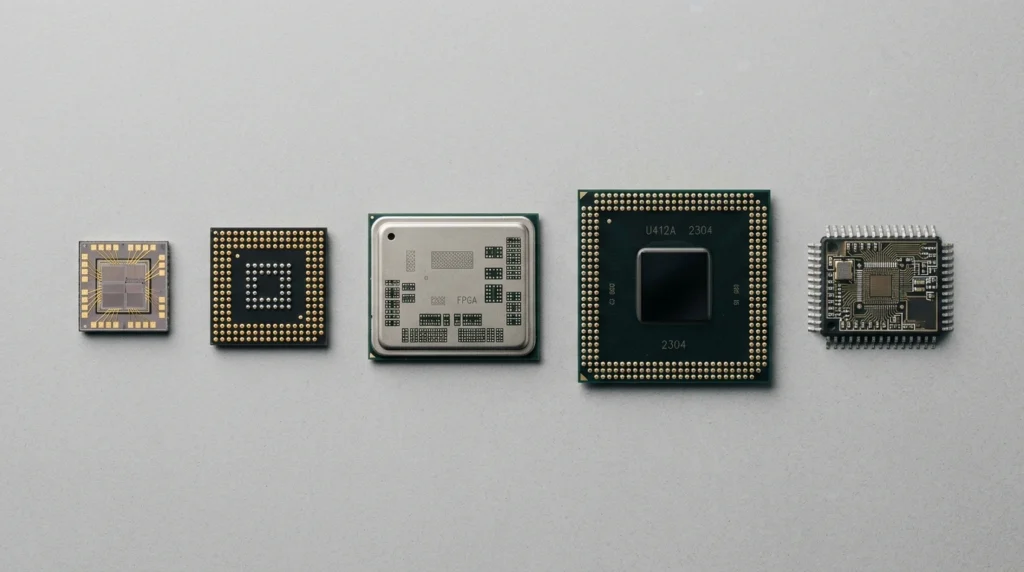
A handful of terms keep showing up in the news, so here’s the cheat sheet worth keeping in your back pocket:
- GPU (graphics processing unit): originally built for video games, now the workhorse of AI. Nvidia owns this category.
- ASIC (application-specific integrated circuit): a chip designed for one job only. Google’s and Amazon’s custom AI chips are ASICs.
- HBM (high-bandwidth memory): stacked memory that feeds data to the chip fast enough to keep it busy. There’s a global shortage of it.
- Accelerator: a catch-all for any chip that speeds up AI work, GPU or ASIC.
- Inference vs. training: training is teaching the model; inference is the model answering you. Inference now eats roughly two-thirds of all AI compute.
Memorize those five and about 90% of the scary headlines suddenly make sense.
Nvidia’s Vera Rubin: The Chip Everyone’s Waiting For
If one launch defines AI chips news today, it’s Nvidia’s Vera Rubin platform. Nvidia unveiled it at CES in January, and by spring it had moved into full production.
The names trip people up, so let me untangle them. “Rubin” is the GPU, named after the astronomer Vera Rubin. “Vera” is the companion CPU. Together they form a platform, and Nvidia bundles several chips into rack-sized systems like the Vera Rubin NVL72.
The specs that actually matter
The headline Rubin GPU carries around 336 billion transistors and 288GB of HBM4 memory, pushing roughly 22 terabytes per second of memory bandwidth, close to triple what last year’s Blackwell chips managed. Nvidia claims up to 5x the inference performance and 3.5x the training throughput of Blackwell, and says the new design needs about a quarter as many GPUs to train the same large model. Those aren’t small jumps. In this industry, a generational leap like that resets everyone’s plans.
Why you should care even if you’ll never touch one
Here’s the part that connects to your actual life. Nvidia says Rubin cuts the cost of generating each “token” (a chunk of text, image, or video) by around 10x. When the cost of running AI drops that sharply, it eventually shows up as cheaper subscriptions, more generous free tiers, and tools that simply weren’t affordable before. The wave of free AI video generators that flooded the internet this year exists partly because the hardware underneath got dramatically more efficient.
One honest caveat: these things are monsters to run. The flagship racks demand 100% liquid cooling, there’s no air-cooled version, and Nvidia will likely make only an estimated 200,000 to 300,000 of them this year. Demand wildly outstrips that. If you’re a smaller company hoping to rent Rubin capacity, you’re probably waiting until 2027.
The Broadcom Selloff That Erased Trillions
Now the scary headline. On June 3, Broadcom reported quarterly results that, on paper, looked terrific: revenue up 48% year over year, record AI sales, beats on the numbers Wall Street tracks most closely.
The stock dropped 14% the next day.
Why? Because Broadcom’s guidance for next quarter’s AI chip sales landed near $16 billion against expectations closer to $17.2 billion, and the company didn’t raise its full-year forecast. In a market this hot, “merely very good” reads as a warning shot. The selloff spread fast. AMD and Intel led the declines on June 5, and roughly $1.3 trillion in semiconductor value evaporated.
So is this the AI bubble finally popping? My read: not yet, but it’s a real stress test. The selloff was less about AI demand collapsing and more about expectations getting detached from reality. When investors price a stock for perfection, anything short of perfection gets punished, and that’s a valuation problem, not necessarily a technology one. Demand for AI compute still runs ahead of supply. But anyone telling you these stocks only go up hasn’t been paying attention.
The Custom Silicon Revolt: Why Google and Amazon Are Going Their Own Way
Here’s the slow-motion shift that, to me, matters more than any single chip launch. Nvidia still controls somewhere around 70 to 75% of the AI chip market. But its biggest customers are quietly building their own chips so they need it less.
- Google runs the longest program, its TPU line. The latest, Ironwood, reportedly matches Nvidia’s Blackwell on certain jobs, and Google runs the vast majority of its own AI on TPUs.
- Amazon built an internal supercluster called Project Rainier out of 500,000 of its own Trainium chips, and says it has deployed over a million of them.
- Microsoft has its Maia chips serving Copilot and OpenAI workloads from its US data centers.
- Meta runs its enormous recommendation systems on its own MTIA silicon, the highest-volume AI workload on earth by query count.
- OpenAI partnered with Broadcom to design its own chips, with deployment starting this year.
Why bother? Money and control. A custom chip tuned for one job can cut the cost per query by 30 to 60% for that workload. The example that stuck with me: when Midjourney moved its image generation from Nvidia GPUs to Google’s TPUs, its monthly bill reportedly fell from about $2.1 million to $700,000. That’s nearly $17 million a year saved by a single mid-sized company.
Custom chip shipments are projected to reach almost 28% of the market this year and grow far faster than traditional GPUs. Nvidia isn’t going anywhere, it still owns training and general-purpose work, but the “Nvidia takes everything” story is officially over.
AI Chips Compared: The 2026 Players at a Glance
If you only remember one chart from this whole article, make it this one. Here’s who’s who in the AI chip race right now, in plain terms.
| Chip / Platform | Maker | Type | Best At | Status (Mid-2026) |
| Vera Rubin (R100) | Nvidia | GPU | Training + heavy inference | Full production, shipping to hyperscalers |
| Blackwell (B200) | Nvidia | GPU | General AI workloads | Shipping, sold out into mid-2026 |
| MI400 / MI450 | AMD | GPU | Rack-scale alternative | Arriving 2026 |
| TPU v7 (Ironwood) | ASIC | Efficient inference | In wide internal + cloud use | |
| Trainium | Amazon | ASIC | Cheap training + inference | 1M+ deployed |
| Maia 200 | Microsoft | ASIC | Copilot / OpenAI inference | Deployed in US data centers |
| Wafer-Scale | Cerebras | Wafer chip | Fast inference | Public company, niche scale |
Figures reflect publicly reported specs and status as of mid-June 2026 and shift constantly.
The Bottleneck Nobody Tweets About: Memory, Power, and Water
Spec sheets get the attention. The boring stuff decides who actually wins.
Start with memory. Every top AI chip needs HBM4, that stacked high-bandwidth memory I mentioned. It’s made by just three companies, SK hynix, Samsung, and Micron, and demand has blown past what they can produce. Nvidia’s CEO reportedly left a “please make more” note at a supplier’s booth this year. SK hynix is doubling capacity, but that takes years to come online.
Then there’s manufacturing. Nearly every advanced AI chip on the planet is fabricated by one company, TSMC in Taiwan. Its own CEO has said supply won’t catch up to demand until 2027. When an entire industry depends on a single foundry on a single island, that’s a fragility worth keeping in mind.
And then the part that surprises people: power and water. Modern AI data centers draw staggering amounts of electricity and use water for cooling. The real 2026 race isn’t only about faster chips, it’s about whether the grid and the water supply can keep up. The smartest model in the world is just expensive software if you can’t plug it in.
China, Export Controls, and the Politics of Silicon
You can’t follow AI chips news today without bumping into trade policy. The short version: the US controls who gets the most powerful chips, and the rules keep moving.
In January, regulators softened their stance, allowing limited sales of Nvidia’s H200 and AMD’s MI325X to China on a case-by-case basis, with a 25% tariff and tight conditions attached. Around ten Chinese firms, including Alibaba and ByteDance, got cleared to buy, each capped at 75,000 units.
Then in late May, the government tightened a loophole, clarifying that the rules also cover China-headquartered companies operating outside China, and naming Nvidia’s newest Blackwell and Rubin chips as off-limits. Nvidia, for its part, halted China-bound production of some chips and redirected that factory capacity toward Rubin instead.
For US buyers, the takeaway is subtle but real: every chip that doesn’t ship to China is a chip that ships somewhere else, which slightly eases the supply crunch at home. Geopolitics and your future cloud bill are more connected than they look.
AMD, Intel, and the Fight for Second Place
Nvidia gets the spotlight, but the undercard is getting interesting.
AMD has been clawing real share from Intel, recently capturing a record one-third of the server CPU market, and its upcoming MI400 series is its first genuine rack-scale answer to Nvidia’s biggest systems. Whether it lands depends on software as much as silicon, because Nvidia’s CUDA ecosystem is a deep, sticky moat that’s killed plenty of “Nvidia killers” before.
Intel, meanwhile, is fighting to stay relevant with new Xeon chips aimed at “agentic AI” and its 18A manufacturing process. It’s not winning the AI chip war, but writing it off entirely has burned people more than once.
There’s also a fresh face worth knowing: Cerebras, which makes wafer-scale chips the size of a dinner plate, went public this year. The stock opened at nearly double its IPO price, then promptly fell 20% the next day, a tidy little summary of how this entire sector trades.
What This Means If You’re Just Buying a Phone or a Laptop
Let’s bring this down to earth, because most of you aren’t shopping for data center racks.
The biggest near-term consumer story is AI moving onto your devices. At Computex in June, Nvidia announced its first PC chip, the RTX Spark, and signaled it wants to “reinvent the PC.” That sent AMD, Intel, and Qualcomm stock lower, because Nvidia muscling into laptops threatens all three. The bet is that your laptop increasingly runs AI locally instead of phoning the cloud for every request.
You’re already seeing early versions of this. The iPhone 17 Pro leans on Apple’s own silicon to run features on-device. Chromebooks and Windows laptops are picking up “AI” labels too, though, as I argued in our Chromebook vs laptop breakdown, a sticker doesn’t always mean much. My honest advice: don’t overpay today for AI features you might never use. The hardware is improving so fast that this year’s “AI laptop” premium often isn’t worth it.
The same logic applies to the AI agents and assistants you’re tempted to pay for. The tools getting cheaper and sharper are riding the exact chip improvements in this article. Sometimes the smartest move is to wait one cycle and let the price come to you.
Common Mistakes People Make Reading AI Chip News
A few traps I see people fall into constantly:
- Treating stock moves as technology news. A chip stock falling 10% doesn’t mean the chip got worse. Usually it means expectations ran too hot.
- Assuming bigger numbers help you directly. “5x faster” describes a data center part you’ll never touch. What reaches you is cheaper apps, months later.
- Believing the “Nvidia killer” headline. Something gets crowned the Nvidia killer every year. Nvidia’s software lock-in keeps outliving them.
- Ignoring supply. A chip that’s announced but back-ordered 18 months isn’t really available. Read the lead times, not just the launch slides.
- Confusing “AI” branding with real capability. Plenty of products slap “AI chip” on a spec sheet purely to justify a price bump.
Expert Tips: How to Follow This Without Losing Your Mind
After two years on this beat, here’s how I’d suggest a normal person actually track AI chips news today:
- Follow the earnings calls, not the rumors. The quarterly reports from Nvidia, Broadcom, TSMC, and AMD carry the real signal. Everything between them is noise.
- Watch three numbers: data center revenue, gross margins, and order backlog. Those tell you whether demand is genuinely there.
- Separate training news from inference news. Training is Nvidia’s fortress. Inference is where the custom-chip fight is being decided.
- Treat a single-day price swing as weather, not climate. The trend over quarters matters; the panic over hours rarely does.
- Remember the physical limits. When you read about a giant chip order, ask where the power and memory are coming from. That’s usually the real constraint.
The Honest Pros and Cons of the 2026 AI Chip Boom
The upside
- AI is getting dramatically cheaper to run, which trickles down to better, cheaper tools for everyone.
- Real competition is finally emerging, which is healthy after years of one company owning nearly everything.
- On-device AI means more privacy and less dependence on the cloud.
The downside
- Valuations are stretched, and selloffs like June’s will keep happening.
- The whole system leans on one foundry and three memory makers, which is fragile.
- The power and water demands are enormous and nowhere near fully solved.
- A lot of “AI” branding on consumer gear is marketing, not substance.
Frequently Asked Questions
What is the biggest AI chip news today?
The dominant stories are Nvidia’s Vera Rubin platform entering full production, a sharp June 2026 semiconductor selloff sparked by Broadcom’s cautious guidance, and the accelerating shift toward custom chips built by Google, Amazon, and Microsoft.
Who makes the best AI chips in 2026?
Nvidia still leads overall, holding roughly 70 to 75% of the market with its Rubin and Blackwell GPUs. For specific workloads, though, custom chips like Google’s TPU and Amazon’s Trainium can be cheaper and just as fast.
Why did AI chip stocks crash in June 2026?
Broadcom reported strong earnings on June 3 but gave next-quarter AI guidance below Wall Street’s hopes. Because the sector was priced for perfection, that mild disappointment triggered a selloff that erased around $1.3 trillion across semiconductor stocks.
What is HBM4 and why does it matter?
HBM4 is the latest high-bandwidth memory that feeds data to AI chips fast enough to keep them busy. Only three companies make it and supply is tight, making it one of the biggest bottlenecks in the entire AI hardware industry.
Are custom AI chips a threat to Nvidia?
Yes, but a partial one. Custom chips, called ASICs, from cloud giants are taking share in inference, where cost matters most. Nvidia still dominates training and general-purpose AI, protected by its CUDA software ecosystem.
Can China buy advanced AI chips?
Only certain ones, under tight conditions. US rules currently allow limited sales of older chips like Nvidia’s H200 on a case-by-case basis with tariffs, while the newest Rubin and Blackwell chips remain restricted.
Will AI chips make my phone or laptop better?
Gradually, yes. More AI is moving onto devices, so phones and laptops can run features without the cloud. But many AI labels on 2026 gear are marketing, so don’t overpay for capabilities you won’t actually use.
Why is TSMC so important to AI chips?
TSMC manufactures nearly all of the world’s advanced AI chips, including Nvidia’s and AMD’s. Its CEO has said supply won’t meet demand until 2027, which makes this single company a critical chokepoint for the whole industry.
What’s the difference between training and inference chips?
Training chips teach AI models and need maximum power and flexibility, which is Nvidia’s strength. Inference chips run the finished model answering your prompts, where efficiency matters more, which is why custom chips are gaining ground there.
Is now a good time to buy AI chip stocks?
That’s a personal financial decision, and I’m not a financial advisor. Factually: valuations are high, volatility is real (see June’s selloff), and underlying demand for AI compute still exceeds supply. Do your own research before investing.
The Bottom Line
Strip away the trillion-dollar swings and the alphabet soup of chip names, and AI chips news today tells a simple story: the hardware running artificial intelligence is getting faster, cheaper, and more contested by the month. Nvidia still leads, but for the first time it’s genuinely surrounded, by its own customers, by trade politics, and by the plain physics of power and memory.
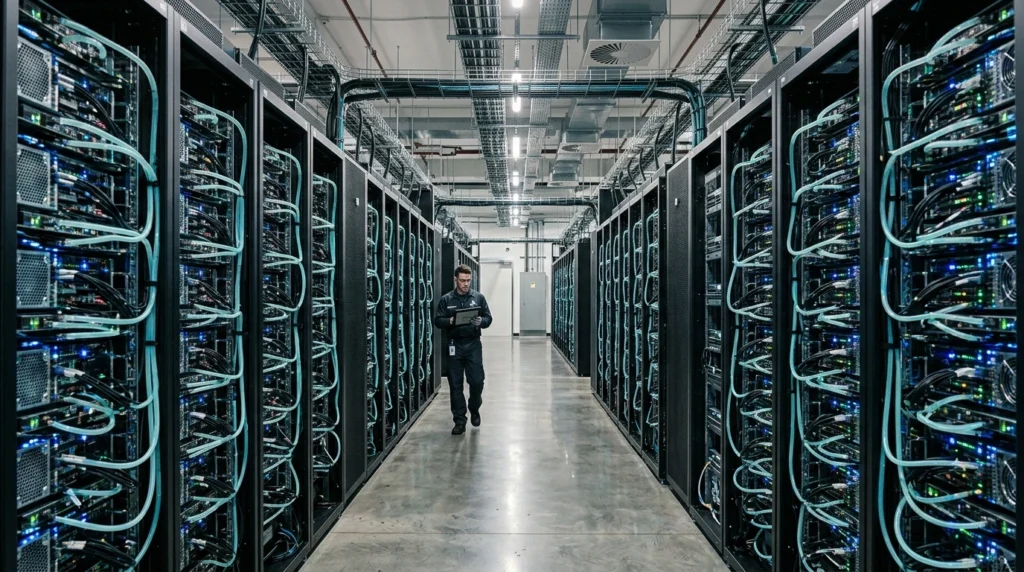
For you, the practical reader, the signal cuts through all of it: the tools you use are about to get cheaper and more capable, and patience usually beats paying the early-adopter tax. Watch the earnings, ignore the daily panic, and remember that behind every flashy AI demo sits a very physical, very expensive, very real piece of silicon, and a supply chain doing everything it can to keep up.

Continue Reading on CripsyWire
For more practical AI coverage for US buyers, see our full AI tools and agents library. When you are deciding between competing tools, the reviews and comparisons section breaks down head-to-head matchups. AI features that live inside your phone are tracked in smartphones, and AI on your wrist or finger in wearables. All of this is part of CripsyWire's broader Tech coverage — start at the homepage for what is newest.