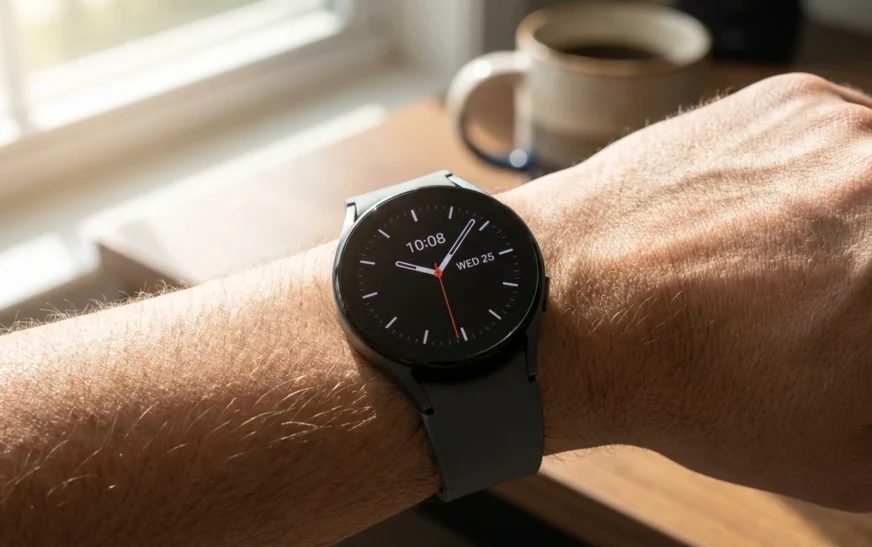
Three years ago I strapped a Galaxy Watch 5 onto my wrist expecting a minor refresh of the Watch 4. That’s basically what I got. What I didn’t expect was to still be wearing one occasionally in 2026, long after two newer generations replaced it on Samsung’s shelves. That’s the real story here — not whether it was good in 2022, but whether it still holds up now that the Galaxy Watch 8 series is the current flagship and Samsung has quietly closed the book on Watch 5 software updates.
If you’re weighing a new, refurbished, or hand-me-down Galaxy Watch 5 against a newer Samsung wearable — or wondering if it’s finally time to retire yours — this review skips the marketing language and gets into what actually matters for a 2026 buying decision.
What Is the Galaxy Watch 5?
Quick answer: The Galaxy Watch 5 is Samsung’s 2022 Wear OS smartwatch, released in 40mm and 44mm sizes with an aluminum body, sapphire crystal glass, a BioActive health sensor (heart rate, ECG, body composition, SpO2), and up to 40 hours of battery life. It launched at $279 and is now sold almost exclusively refurbished or secondhand, since Samsung discontinued it after the Watch 6 arrived.
It sits between the entry-level Galaxy Watch line and the rugged Watch 5 Pro, and it was built to run Samsung’s version of Wear OS 3.5 — later updated to One UI Watch 5 before support ended.
Design and Build Quality: Has It Aged Well?
Handling a Galaxy Watch 5 today feels almost identical to handling one on day one, and that’s a genuine compliment. The Armor Aluminum case hasn’t warped, the buttons haven’t gone mushy, and the sapphire crystal display — one of the actual upgrades over the Watch 4 — still resists the kind of hairline scratches that show up on cheaper glass after a few years of desk edges and doorframes.
Comfort and Fit
The 40mm and 44mm cases are genuinely two of the more comfortable smartwatch shells Samsung has made. Samsung ditched the rotating physical bezel from the Watch 4 Classic era in favor of a slimmer profile, which some longtime Galaxy Watch fans still resent. If you’re one of them, the newer Galaxy Watch 8 Classic Review brought that bezel back, and it’s worth reading before you commit either way.
Durability Numbers That Still Hold Up
- IP68 dust and water resistance
- 5ATM water resistance rating (swim-safe, not dive-safe)
- MIL-STD-810H military-grade durability certification
- Sapphire crystal glass (Watch 5 and 5 Pro only — not the Watch 4)
None of that has degraded with age because it’s physical hardware, not a spec that ages out. What has aged is everything running underneath the glass, which we’ll get to.
Health and Fitness Tracking: What You’re Actually Getting
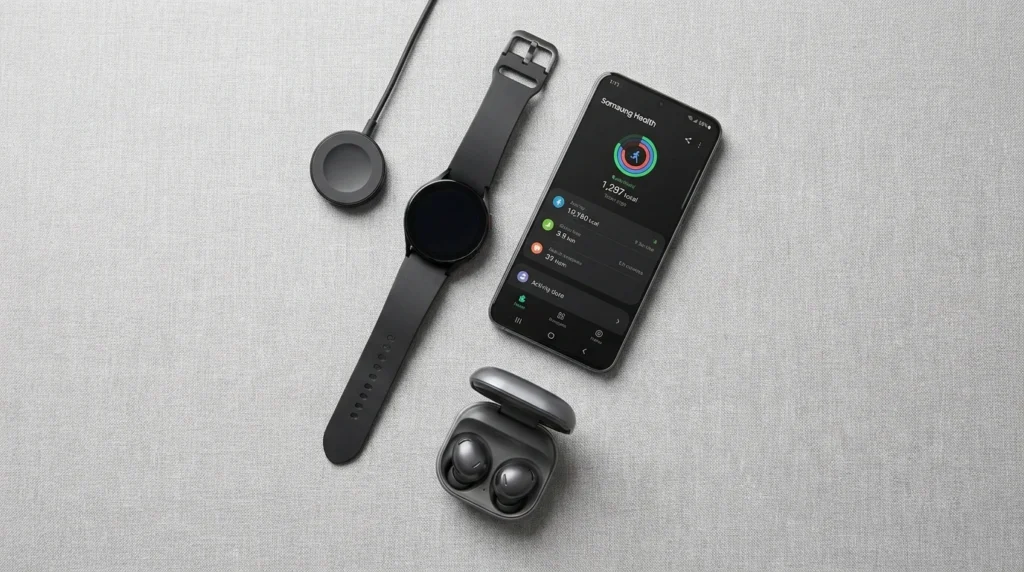
Samsung’s BioActive Sensor is still the headline feature, and in daily use it hasn’t fallen far behind. It bundles optical heart rate, electrical heart signal (ECG), and bioelectrical impedance analysis (body composition) into one sensor module — something most rivals split across separate chips or skip entirely.
Body Composition and Heart Monitoring
The body composition reading (body fat percentage, skeletal muscle mass, BMI) isn’t lab-accurate — no wrist wearable’s is — but it’s consistent enough to track trends over weeks, which is really all this kind of metric is good for anyway. Treat the number as a trendline, not a diagnosis.
ECG readings work well for spot-checking irregular rhythm, and the always-on heart rate tracking is reliable during steady cardio. Where it stumbles, like most optical sensors, is during high-intensity interval work with a lot of wrist movement — expect the occasional spike or dropout on a sprint set.
Sleep Tracking and the Skin Temperature Sensor
Sleep tracking on the Watch 5 covers stages (REM, light, deep, awake), blood oxygen during sleep, and snoring detection through your phone’s mic. It’s genuinely one of the more detailed sleep suites in this price bracket, even now.
The skin temperature sensor was the marquee “new” feature at launch, but it didn’t actually do anything for the first several months — Samsung shipped the hardware before the software caught up. It eventually powered cycle tracking predictions, and it still does that job fine, though it’s not a substitute for a dedicated body-temperature tracker.
How It Stacks Up Against Other Wearables
Smartwatches and fitness rings solve overlapping but different problems, and if body-composition data and cycle tracking matter more to you than 24/7 wear comfort, it’s worth reading the Oura Ring vs Galaxy Ring comparison to see how a ring-form wearable handles the same metrics differently. If you’re coming from a more athlete-focused background and torn between recovery-first tracking and a mainstream smartwatch, the Whoop vs Apple Watch breakdown covers that trade-off in a way that applies just as well when Samsung is one of your options.
GPS and Workout Tracking: Does It Keep Up?
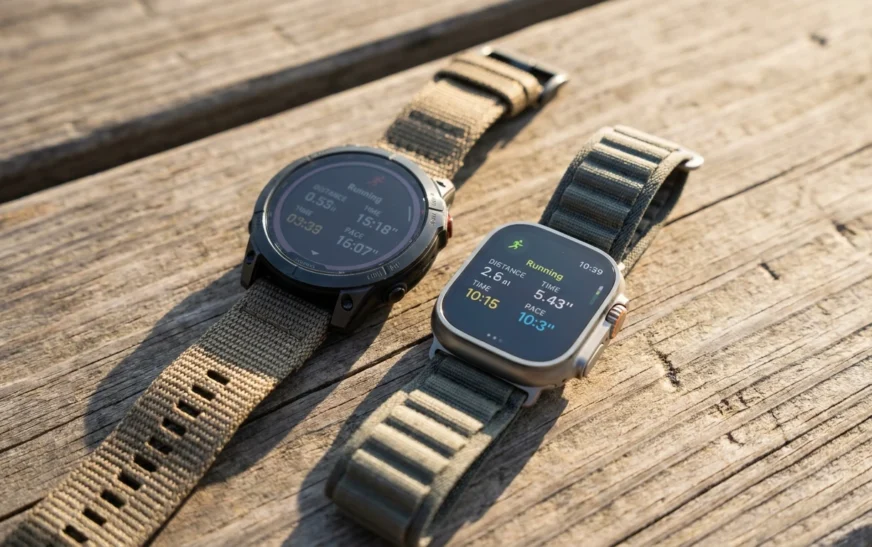
The Watch 5 uses dual-frequency GPS (L1 + L5), which was a meaningful upgrade over the Watch 4’s single-frequency setup and still performs respectably today. On open runs and rides, positional accuracy tracks close to what you’d get from a dedicated Garmin, with the occasional wobble around dense tree cover or tall buildings — nothing unusual for a wrist-based GPS in 2026.
Samsung Health logs over 90 workout types automatically, and manual tracking covers essentially every activity you’d realistically do. Where it’s weaker is open-water swim tracking, where accuracy drops compared to dedicated swim watches, and in structured strength training, where rep-counting is inconsistent enough that most serious lifters just log sets manually.
Samsung Health App and Daily Ecosystem
The Samsung Health app remains actively maintained even though the watch itself isn’t getting core OS updates, which softens the blow somewhat. You still get weekly summary reports, sleep coaching insights, and social step challenges. The catch is that newer AI-driven features Samsung has rolled into Samsung Health for current-generation watches — smarter recovery scoring, more advanced running coach tools — either don’t appear on the Watch 5 at all or arrive in a stripped-down form, since they lean on hardware the older chip doesn’t fully support.
Real-World Testing Notes
A few things only show up after months of actual daily wear, not a spec sheet:
- The always-on display genuinely helps with battery anxiety — you stop obsessively checking charge percentage because you can glance at the time without waking the screen.
- Haptic feedback for notifications is strong enough to feel through a jacket sleeve, which matters more than it sounds like it should.
- Rotating the bezel-free touch ring around the screen edge for scrolling works, but it took about a week of muscle memory before it stopped feeling like a compromise next to the old physical bezel.
- Swapping bands is genuinely easy without tools, which isn’t true of every smartwatch in this price range.
Battery Life in 2026: The Honest Number
Samsung rated the Galaxy Watch 5 for up to 50 hours in power-saving mode and roughly 40 hours of typical use, later bumped by a software update to closer to 80 hours in extended battery mode with most features stripped back. In the real world, at launch, that translated to about a day and a half with the always-on display active.
Three-plus years in, lithium-ion batteries degrade — that’s chemistry, not opinion. Units still on their original battery are commonly reporting 60-75% of original capacity by now, depending on charge habits. In practice that means most Watch 5 owners in 2026 are charging nightly, sometimes every 18-20 hours, rather than stretching to two full days. If you’re buying used, ask the seller for a battery health check before you commit — some third-party repair shops and refurbishers can pull this data directly from the watch.
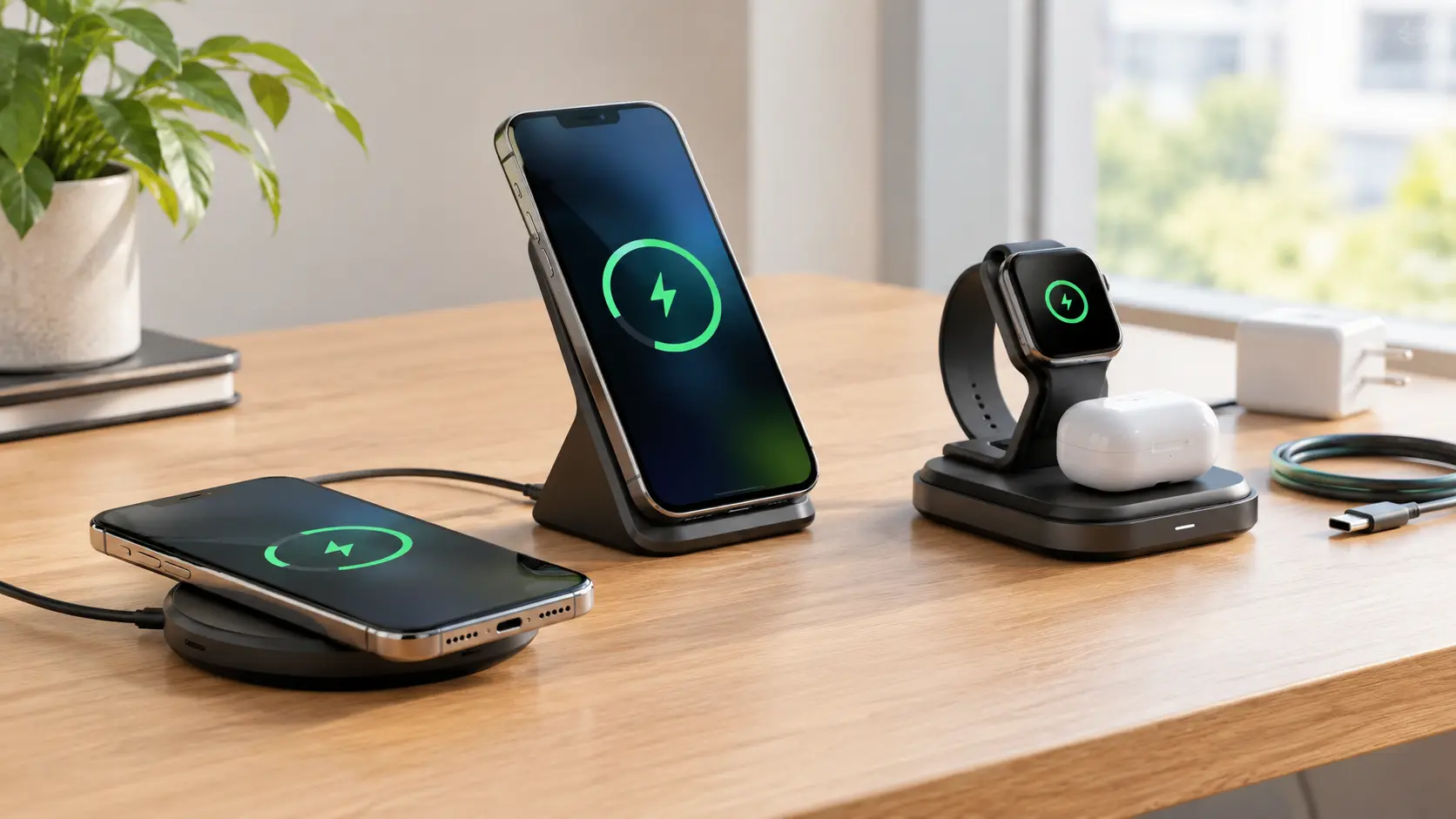
Fast charging is still solid: roughly 0 to 45% in about 30 minutes on the included charger.
Performance and Software Support: Where the Watch 5 Actually Falls Behind
This is the part most 2022-era reviews never had to grapple with, and it’s the biggest reason to think twice before buying one new-in-box in 2026.
The Galaxy Watch 5 runs on the Exynos W920 chip, and Samsung committed to four years of OS and security updates from launch. That window closed around August 2026. Practically, this means:
- No further Wear OS version upgrades
- Security patches have stopped or are winding down
- New Samsung Health and Galaxy AI features rolling out to the Watch 7/8/Ultra lineup won’t reach the Watch 5
- Third-party app compatibility will slowly narrow as developers target newer Wear OS baselines
Day to day, the watch still works. Notifications, apps, and Samsung Health sync all function normally right now. But “still works today” and “future-proof” are different promises, and the Watch 5 can’t make the second one anymore.
Galaxy Watch 5 vs Galaxy Watch 5 Pro
The Pro isn’t a strictly better watch — it’s a different watch for a different wrist. It swaps the aluminum case for titanium, drops in a bigger 590mAh battery (versus 284mAh/410mAh on the standard Watch 5), and adds offline route navigation for hikers and cyclists. You’re also stuck with a single 45mm size, which won’t suit smaller wrists.
If you want the same sensor suite in a smaller, lighter package and don’t need multi-day hiking navigation, the standard Watch 5 remains the more sensible pick — especially at the discounted prices it sells for now.
Should You Buy a Galaxy Watch 5 Instead of a Newer Watch in 2026?
This is the question that actually matters in 2026, and the honest answer depends entirely on why you’re buying it.
If your top priority is the newest chip, the longest remaining software runway, and features like the latest Galaxy AI health tools, skip the Watch 5 entirely. The current flagship line — reviewed in detail in this Galaxy Watch 8 Classic Review — brings back the rotating bezel, a faster Exynos W1000 chip, and years more support ahead of it. That’s the watch Samsung wants you buying today, and for good reason.
If your priority is spending as little as possible on a smartwatch that still does 90% of what a modern Galaxy Watch does — heart rate, ECG, body composition, sleep tracking, GPS, contactless payments — a refurbished or secondhand Watch 5 at a steep discount is genuinely defensible. Just go in knowing the software clock has run out and budget for a replacement in a year or two, not five.
Galaxy Watch 5 Price in 2026: New, Refurbished, and Secondhand
Samsung no longer sells the Watch 5 new. What’s left on the market falls into three buckets:
- New old stock — occasionally shows up at third-party retailers, usually near or above original $279/$329 (LTE) pricing, which is a poor deal given the software situation.
- Certified refurbished — the sensible middle ground. Expect roughly 50-70% off original MSRP depending on condition grade and battery health disclosure.
- Used marketplace listings — the cheapest option, with prices frequently dipping into double digits for well-worn Bluetooth-only models, but with zero guarantees on battery health or screen condition.
Whichever route you take, confirm the seller discloses battery health and whether it’s the Bluetooth-only or LTE model — the LTE version needs an active carrier data plan to use cellular features independently of your phone, and it’s worth running your expected usage through a data usage calculator before you commit to an add-on line just for watch notifications.
Compatibility: What Phone Do You Actually Need?
The Galaxy Watch 5 is Android-only — full stop. There’s no iPhone pairing option, and Samsung has never offered one for any Galaxy Watch generation. You’ll need:
- An Android phone running Android 8.0 or later
- The Samsung Wearable app and Galaxy Watch Studio installed
- A Samsung Galaxy phone for the full feature set (some health tools are Samsung-exclusive)
Before pairing an older or refurbished unit, it’s worth checking how much space you actually have free for the companion apps and health data sync — a quick pass through a phone storage calculator can save you an annoying mid-setup scramble to delete photos.
Common Problems and Limitations (The Ruthless Version)
No sugar coating here — these are the recurring complaints that show up across owner communities and repair shops, not marketing talking points:
- Battery drain after firmware updates. Some users report noticeably worse battery life after certain One UI Watch point releases. Not universal, but common enough to be a known pattern.
- Strap connector wear. The proprietary quick-release pins can loosen with heavy strap-swapping over years of use.
- Skin temperature accuracy is limited. It’s useful for trend-based cycle tracking, not for detecting fever or illness in real time.
- No true offline maps on the standard model. That’s a Pro-exclusive feature — the base Watch 5 needs your phone nearby for full turn-by-turn navigation.
- Bezel-free touch navigation takes real adjustment if you’re coming from a Classic model or an Apple Watch’s Digital Crown.
- Software feels increasingly dated next to current One UI Watch versions. Menu layouts and widget options that Samsung has refined on newer models simply won’t arrive here.
- Water resistance isn’t a lifetime guarantee. Seals can degrade over years, so a four-year-old unit swims less confidently than a brand-new one, even with an unchanged IP68 rating on paper.
- Third-party app selection is thinning. A handful of watch faces and fitness apps built for newer Wear OS baselines have already dropped Watch 5 compatibility.
If you’re buying a budget-focused wearable and the Watch 5’s aging software genuinely worries you more than its price appeals to you, it’s worth putting it side by side with something like the Amazfit Balance Smart Watch Review, which takes a different approach to longevity and price entirely.
None of these are dealbreakers on their own, but stacked together they’re worth knowing before you buy at full price rather than after your return window closes.
Galaxy Watch 5 FAQs
Is the Galaxy Watch 5 still worth buying in 2026?
Only at a steep discount. Samsung’s official software support window has closed, so you’re buying a capable but aging device. It’s a reasonable budget pick for basic health tracking and notifications, not a future-proof investment.
How long does the Galaxy Watch 5 battery last now?
Original units are typically down to 60-75% of factory battery capacity after three-plus years, meaning most owners now charge nightly rather than stretching to the originally advertised 40-hour window.
Does the Galaxy Watch 5 work with an iPhone?
No. Like every Galaxy Watch generation, it’s Android-exclusive and requires the Samsung Wearable app, which isn’t available for iOS pairing.
What’s the difference between the Galaxy Watch 5 and Galaxy Watch 5 Pro?
The Pro adds a titanium case, a significantly larger battery, offline route navigation, and 45mm-only sizing. The standard Watch 5 offers the same core sensors in a lighter, more size-flexible package.
Will the Galaxy Watch 5 get more software updates?
Samsung committed to four years of updates from the August 2022 launch, a window that closed around mid-to-late 2026. New Wear OS versions and Galaxy AI features are going to newer models instead.
Is the Galaxy Watch 5 or Galaxy Watch 8 better for a new buyer in 2026?
For anyone buying new, the Watch 8 series is the better long-term choice — faster chip, more years of updates ahead, and the option of the rotating bezel on the Classic model. The Watch 5 only makes sense secondhand, at a real discount.
Can the Galaxy Watch 5 track swimming?
Yes, with 5ATM water resistance rated for pool and open-water swimming. It logs laps, distance, and heart rate reasonably well in a pool, but accuracy drops in open water compared to a dedicated swim-focused watch.
Does the Galaxy Watch 5 need a Samsung phone?
It works with any Android phone running 8.0 or later, but a handful of health and connectivity features are Samsung-exclusive. Pair it with a non-Samsung Android phone and you’ll still get core tracking, just not every bonus feature.

Continue Reading on CripsyWire
More wearable coverage lives in our full wearables section. For direct comparisons like Oura vs Galaxy Ring or Whoop vs Apple Watch, the reviews and comparisons section goes deeper. Most wearables now pair tightly with your smartphone, and the AI agents and on-device intelligence behind them are evolving fast. New owners should also browse our setup and hidden features guides. Everything is part of CripsyWire Tech — start at the homepage.