Quick answer: Doubtnut no longer has a standalone valuation. Allen Career Institute acquired the doubt-solving app in December 2023 in a deal reported at roughly $10 million, according to TechCrunch. Its last funding-round valuation was about $50 million in 2020, and Byju’s once offered to buy it for as much as $150 million. Doubtnut turned that down. Three years later, it sold for a fraction of it.
That one paragraph is the answer most people searching “doubtnut valuation” actually want. But the number on its own tells you almost nothing. The interesting part is how a company with 30+ million monthly users, backing from Tencent and Peak XV Partners (formerly Sequoia India), and one of the most-loved education apps in India ended up selling for less than it raised in a single funding round.
I’ve followed the Indian edtech cycle closely since the pandemic boom, and Doubtnut is the cleanest case study I know of a brutal truth in startup valuation: users are not revenue, and revenue is not profit. Let’s walk through the whole thing, with real numbers.
What Was Doubtnut? A 60-Second Refresher
Doubtnut was founded in Gurugram by IIT Delhi alumni Tanushree Nagori and Aditya Shankar (most records say 2016–2017, depending on whether you count incorporation or launch). The product was almost stupidly simple, in the best way.
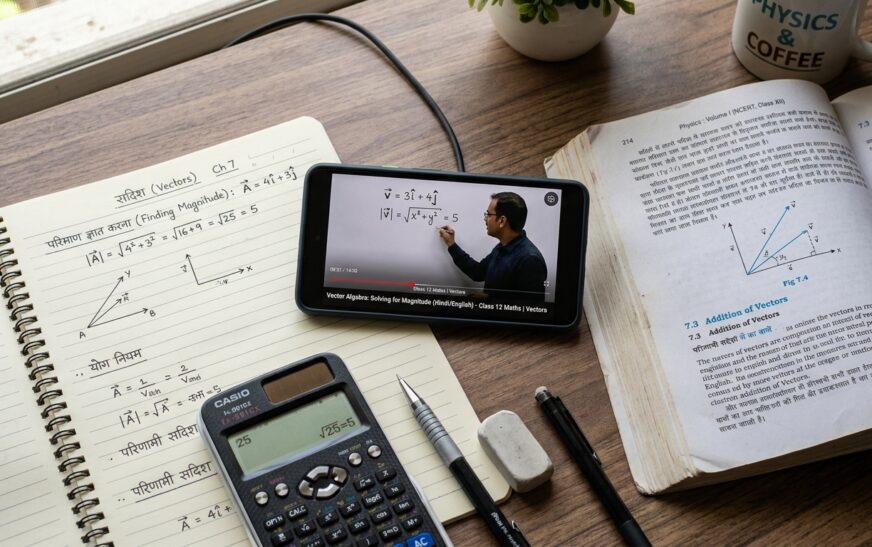
A student stuck on a math problem takes a photo of the question. Doubtnut’s image recognition and machine learning stack matches it against a library of solved questions and instantly serves a short video solution. If no match exists, a tutor records one. Free. In multiple Indian languages.
That last detail mattered more than anything. Around 85% of Doubtnut’s users came from outside India’s top 15 cities, and a majority studied in state boards where instruction happens in vernacular languages. While Byju’s and Unacademy fought over English-speaking metro students, Doubtnut owned tier-3 and tier-4 India almost by default.
By early 2020 the platform claimed over 13 million monthly active users and said it had cleared more than 250 million doubts across math, physics, chemistry, and biology. By the time of the Allen acquisition, its monthly reach across app, web, YouTube, and WhatsApp was reported at around 32 million students.
Huge numbers. Remember them, because they’re about to become the villain of this story.
Doubtnut Valuation Timeline: Every Number That Matters
Here’s the full valuation history in one place, which, oddly, almost none of the pages ranking for this keyword actually give you.
| Year | Event | Valuation / Amount |
|---|---|---|
| 2017 | Seed funding (Sequoia India and others) | Undisclosed |
| Jan 2020 | $15M Series A led by Tencent | ~$50M valuation |
| Mid 2020 | Byju’s acquisition talks | $100M–$150M offer (fell through) |
| Jan–Feb 2021 | ~$31M Series B led by SIG and Lupa Systems | Not officially disclosed |
| Mar 2023 | Small Series B extension | Last standalone valuation ~₹390 crore (reported) |
| Dec 4, 2023 | Acquired by Allen Career Institute | ~$10M reported deal value |
Total raised across all rounds: roughly $53 million, per Tracxn and PitchBook data. Which means Doubtnut ultimately sold for about a fifth of the capital investors had put into it.
The 2020 Peak: A $50M Valuation and a $150M Offer
January 2020 was Doubtnut’s arrival moment. The $15 million Series A, led by Chinese giant Tencent with Sequoia India doubling down, valued the company at nearly $50 million. Doubtnut was seeing around 1.1 million daily active users at the time.
Then COVID hit, every student in India went online, and edtech went vertical. By mid-2020, Byju’s, flush with capital and acquiring everything in sight, entered late-stage talks to buy Doubtnut. Entrackr reported the deal at over $100 million; TechCrunch later put the figure as high as $150 million.
The deal collapsed over valuation disagreements. Doubtnut’s founders reportedly wanted more. In hindsight, that negotiation was the single most expensive decision in the company’s history. Byju’s walked away and bought WhiteHat Jr for $300 million instead. Interestingly, Byju’s overpaying for WhiteHat Jr aged just as badly, but that’s a different article.

2021: The Series B That Bought Time, Not Answers
In early 2021 Doubtnut raised roughly ₹224 crore (about $31 million) led by SIG and James Murdoch’s Lupa Systems. The stated plan: expand into more Indian languages, launch paid courses, and push toward a $30 million ARR target by September 2021.
That ARR target is worth pausing on, because the company never got anywhere close. Which brings us to the ugly part.
Why Doubtnut’s Valuation Collapsed
No sugar-coating here. Doubtnut didn’t get unlucky. It had a structural problem that free users and viral growth papered over for years.
The Monetization Wall
Doubtnut’s own filings tell the story better than any analyst could:
- FY22: revenue of ₹15.2 crore against losses of ₹179.2 crore (per YourStory’s review of financial statements). That’s spending nearly twelve rupees to earn one.
- FY23: revenue improved to about ₹26.6 crore, per internal documents cited by BW Disrupt. Better, but nowhere near the burn.
The core issue was baked into the audience. Doubtnut’s superpower — reaching price-sensitive students in small-town India — was also its commercial ceiling. These were exactly the users least able or willing to pay for online courses. The product solved a real problem for free, and converting free doubt-solving into paid subscriptions never worked at scale.
An investor quoted anonymously back in 2020 already said it plainly: high DAU and engagement, no monetization. That sentence was true in 2020 and still true in 2023.
The Edtech Winter
Doubtnut’s collapse also wasn’t isolated. Once schools reopened and pandemic-era demand normalized, capital fled Indian edtech. Byju’s, once valued at $22 billion, imploded spectacularly. Vedantu and Unacademy cut thousands of jobs. Companies valued on growth projections suddenly got valued on unit economics, and most of them had none.
Doubtnut spent 2022–2023 shopping itself around. Talks with Prosus Ventures and others went nowhere, again partly over valuation, according to TechCrunch’s reporting. The company cut staff in 2023 while acquisition discussions dragged on. By the time Allen showed up, there wasn’t much negotiating leverage left.
The Final Math
Turn down $150 million in 2020. Sell for $10 million in 2023. That’s roughly a 93% haircut, and for investors who put in $53 million, it was a near-total loss. Tencent, SIG, Lupa, Omidyar Network, Waterbridge — the cap table absorbed the damage. This is what people mean when they say vanity metrics don’t pay back capital.
The Allen Acquisition: What Actually Happened
On December 4, 2023, Allen Career Institute — the Kota coaching giant that preps students for JEE and NEET — announced it had acquired Doubtnut. Neither side disclosed terms, but TechCrunch reported the deal at about $10 million, citing a person familiar with the matter.
Strategically, the deal made sense for Allen even at the peak of the fire sale:
- Instant doubt resolution is a genuine gap in offline coaching. Allen’s CEO Nitin Kukreja called doubt resolution “a core consumer need” in the announcement, and he’s right — a Kota student stuck at 11 pm has nobody to ask.
- Distribution Allen never had. Doubtnut’s tens of millions of monthly users in small-town India are exactly the funnel Allen wants for its paid programs.
- Tech and talent. Allen had raised $600 million from Bodhi Tree Systems in 2022 specifically to build technology-led learning. Buying Doubtnut’s image-recognition and NLP stack for $10 million beats building it.
For context on how AI capabilities like image recognition became cheap enough to commoditize an entire startup’s moat, our breakdown of AI news in 2026 and how to follow it without the hype covers how fast the underlying tech moved between 2020 and now.
What Is Doubtnut Worth Today?
Direct answer: Doubtnut has no independent valuation today. It operates as a unit inside Allen Career Institute, so its worth is folded into Allen’s business rather than tracked as a standalone company. Its last standalone valuation before the sale was reported at around ₹390 crore in March 2023; the sale itself pegged it at roughly $10 million.
Post-acquisition, Doubtnut’s independent financial footprint shrank to almost nothing — some filings reportedly show token standalone revenue, which is exactly what you’d expect from a product absorbed into a parent’s ecosystem. The app still exists and students still use it, but as a strategic asset for Allen, not a venture-scale business.
If you’re looking for a live Doubtnut share price: there isn’t one. Doubtnut was never listed, never approached an IPO, and there is no Doubtnut stock you can buy. Anyone selling “Doubtnut unlisted shares” today deserves serious skepticism.
Doubtnut vs the Competition: How the Valuations Compare
A little context makes the $10 million figure even more striking. During the same cycle:
- Byju’s peaked at $22 billion and bought Aakash for nearly $1 billion — the deal Allen was directly answering with its own edtech push.
- PhysicsWallah went the opposite direction: profitable early, valued over $1 billion, and it targeted almost the same price-sensitive audience Doubtnut had. The difference was monetization discipline from day one.
- Vedantu, Unacademy, Testbook all took severe valuation markdowns in the same window.
The pattern is hard to miss. The Indian edtech companies that survived with valuations intact were the ones that treated affordable paid products as the business, not as an afterthought bolted onto free growth.
5 Lessons Founders and Investors Should Take From Doubtnut
I’d argue the Doubtnut story is more useful than most success stories, because failure math is honest math.
1. Users are a liability until they generate revenue. Every free user has a server cost, a content cost, a support cost. 32 million monthly users at near-zero monetization is a bill, not an asset.
2. An acquisition offer above your fundamentals is a gift, not an insult. The $150M Byju’s offer priced Doubtnut at roughly 40–50x any reasonable revenue multiple of the time. Founders anchored to the next round’s markup instead of the business underneath it.
3. Serving the underserved is noble; monetizing them is a different skill. Vernacular-first, small-town India was a real and admirable market insight. But the go-to-market for that segment needed pricing innovation Doubtnut never cracked and PhysicsWallah did.
4. Timing your exit matters as much as building. Between mid-2020 and late 2023, Doubtnut’s fundamentals didn’t change dramatically. The market’s willingness to pay for those fundamentals changed by 93%.
5. Free AI tools eventually eat free AI products. By 2023, general-purpose AI could solve a photographed math problem — the thing that once justified a $150M offer. When your core feature becomes a commodity capability, your moat is gone. We see the same commoditization dynamic across consumer tools we test, from AI writing checkers to the image-generation prompt techniques that now come baked into free apps. And the hardware side of that squeeze — the falling cost of inference — is exactly what our AI chips coverage tracks.
There’s a flip side worth stating too: the same commoditization that killed Doubtnut’s moat is what makes small, revenue-first projects viable now — a dynamic we’ve written about in the context of AI side hustles that actually pay. The tech got cheap. The winners changed.

Frequently Asked Questions About Doubtnut Valuation
What is Doubtnut’s current valuation?
Doubtnut has no current standalone valuation. Allen Career Institute acquired it in December 2023 in a deal reported at about $10 million, and it now operates inside Allen’s business. Its last pre-acquisition valuation was reported at roughly ₹390 crore in March 2023.
Who owns Doubtnut now?
Allen Career Institute, the Kota-based coaching company best known for JEE and NEET preparation, owns Doubtnut. Allen acquired it on December 4, 2023 as its first edtech acquisition, funded partly by the $600 million Allen raised from Bodhi Tree Systems in 2022.
How much funding did Doubtnut raise in total?
Doubtnut raised approximately $53 million across eight rounds between 2017 and 2023, including a $15 million Series A led by Tencent in January 2020 and a ~$31 million Series B led by SIG and Lupa Systems in early 2021. Other backers included Peak XV Partners, Omidyar Network, and Waterbridge Ventures.
Why did Byju’s not acquire Doubtnut?
Byju’s held late-stage talks to acquire Doubtnut in mid-2020 at a reported valuation of $100–150 million, but the deal collapsed over disagreements on price. Byju’s went on to acquire WhiteHat Jr for $300 million instead, and Doubtnut stayed independent until its far smaller sale to Allen.
Was Doubtnut profitable?
No. Doubtnut posted revenue of about ₹15.2 crore against losses of roughly ₹179 crore in FY22, and around ₹26.6 crore in revenue in FY23. Despite tens of millions of monthly users, the company never found a monetization model that covered its costs.
Can I buy Doubtnut shares?
No. Doubtnut was always a private company and never listed on any stock exchange. After the Allen acquisition, its equity sits within Allen Career Institute, which is also private. There is no legitimate way for retail investors to buy Doubtnut stock.
Who founded Doubtnut?
Doubtnut was founded by IIT Delhi alumni Tanushree Nagori and Aditya Shankar in Gurugram (founding records cite 2016–2017). Aditya Shankar served as CEO. The founding team also included Sonia Sinha and Ravi Sekhar KV per company records on Tracxn.
The Bottom Line
Doubtnut’s valuation story compresses the entire Indian edtech cycle into one company: a genuinely useful free product, explosive pandemic growth, a nine-figure offer refused at the top, a monetization model that never arrived, and a $10 million exit that returned pennies on the invested dollar.
If you came here for a single number, it’s this: ~$50 million at its last priced round, ~$150 million at its peak offer, ~$10 million at exit, and no standalone valuation today.
And if you came here as a founder or investor, the number that should stick with you isn’t any of those. It’s ₹179 crore of losses against ₹15 crore of revenue. Valuations are opinions. Burn is a fact.

Continue Reading on CripsyWire
For more honest tech matchups, browse our full reviews and comparisons library. AI tool reviews live in AI tools and agents, phone reviews in smartphones, and wearable reviews in wearables. Before you buy, our step-by-step guides may help with setup decisions. The CripsyWire homepage highlights what is newest, all under our Tech coverage.